
Review · HISTORICAL TOURS
Historic Lausanne: Exclusive Private Tour with a Local Expert
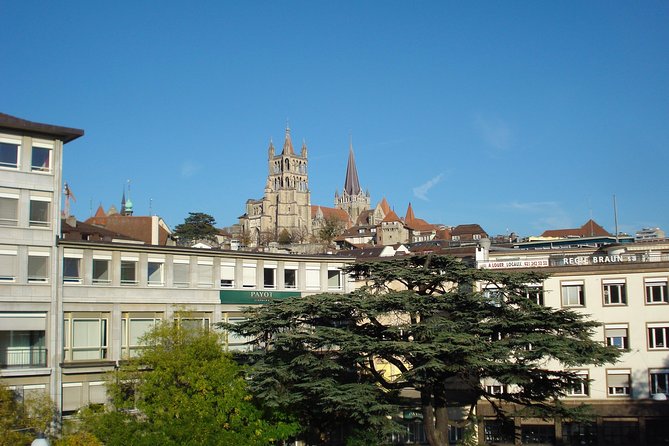
Lausanne rewards curious walkers. This private two-hour tour connects the city’s grand landmarks with quieter streets, giving you personal attention and a local view of Lausanne’s past and present. I like the flexible pace, and I like that the route includes both major sights such as Lausanne Cathedral and less formal stops such as the Escaliers du Marché. The main drawback is the price: at $211.21 per person, it is a serious spend for two hours, especially since museum, monument, and transport tickets are not included.
I also like the way the route moves across Lausanne instead of keeping you in one small square. You begin at Bessières Bridge and finish near the Musée de l’Elysée, passing through the cathedral quarter, Rue de Bourg, Montbenon, and the area around Place de la Gare. One practical concern is reliability: one booking account reported that the guide did not appear, despite arriving early. That is unusual compared with the otherwise positive feedback, but I would confirm the meeting details before setting off.
In This Review
- Key points at a glance
- What this Lausanne walk is really offering
- Beginning at Bessières Bridge
- Lausanne Cathedral, the tour’s main interior highlight
- Escaliers du Marché and the old centre
- Château Saint-Maire and medieval government
- Palais de Rumine at Place de la Riponne
- Rue de Bourg, from old route to shopping street
- Esplanade de Montbenon and the open-air pause
- Finishing at the Musée de l’Elysée
- How much value do you get for $211.21?
- Who should book this private walk?
- Should you book Historic Lausanne?
- FAQ
- How long does the Historic Lausanne private tour last?
- Where does the tour begin?
- Where does the tour end?
- Is this a private tour?
- Can the itinerary be changed?
- Are museum and monument tickets included?
- Is the tour suitable for people with impaired mobility?
- Are service animals allowed?
- Can I cancel for a full refund?
Key points at a glance
- Private from start to finish: Only your own group takes part, so you can ask questions freely and adjust the pace.
- A strong Old Town route: The walk includes Lausanne Cathedral, Château Saint-Maire, Palais de Rumine, and the Escaliers du Marché.
- Two hours on foot: The length suits a first look at central Lausanne, but it leaves little time for long interior visits.
- A guide-led city orientation: You receive local suggestions and context rather than simply moving between photo stops.
- A downhill and uphill city feel: Lausanne’s streets and stairways can be demanding, particularly for anyone with impaired mobility.
- No admission fees included: Museums, monuments, and public transport costs come separately from the tour price.
What this Lausanne walk is really offering
This is not a museum tour with a fixed script. It is a private introduction to Lausanne, shaped around your interests and walking speed. The guide is an independent local, which can make the experience feel more personal than a large group outing led by someone rushing through a standard route.
I see the greatest value in the conversation. You can ask why Lausanne developed around these hills, which buildings still matter to local life, or where to return later for a longer visit. A private guide can also adjust the balance between architecture, religion, civic history, shopping streets, and art.
The two-hour duration is useful for a first orientation. You can cover a good stretch of the centre without giving up an entire morning or afternoon. Still, the itinerary is ambitious. Eight named stops in two hours means some locations will be explained from outside or treated briefly. If you want detailed museum time or a full cathedral visit, you will need to return on your own.
The route also gives you a feel for Lausanne as a city of connections. Bessières Bridge links different parts of town, the cathedral quarter rises above the centre, and Montbenon offers an open pause before the walk finishes near the railway station and Musée de l’Elysée. I like this broad view because you learn how the city fits together, not just how one monument looks.
A few more trips and experiences worth a look
- Zürich Historic District Tour
★ 5.0 · 206 reviews - Basel Historical Old Town Tour
★ 4.0 · 99 reviews - Highlights of Geneva: Dark History Quest Experience
★ 4.0 · 16 reviews
Beginning at Bessières Bridge
The meeting point is Pont Charles Bessières, also called Bessières Bridge, in the 1003 Lausanne area. This is a sensible starting place because the bridge provides an immediate view across Lausanne and shows how the city joins neighborhoods separated by steep streets and changing levels.
You should arrive with comfortable shoes and a little spare time. The meeting point is near public transportation, but the city’s central streets can be confusing if you are watching a map while walking. A mobile ticket is provided, and confirmation arrives at booking, so keep the booking information easy to access.
The bridge is more than a quick photo stop. It introduces Lausanne’s vertical character. You can expect the guide to use the view to explain how the city’s parts connect, then lead you toward the historic centre. Since the walk is private, this is a good moment to tell the guide what matters most to you. Ask for more architecture, church interiors, local life, or practical advice for the rest of your stay.
Lausanne Cathedral, the tour’s main interior highlight
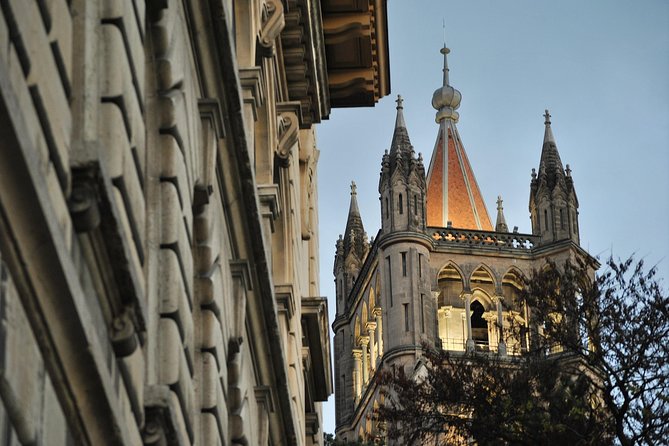
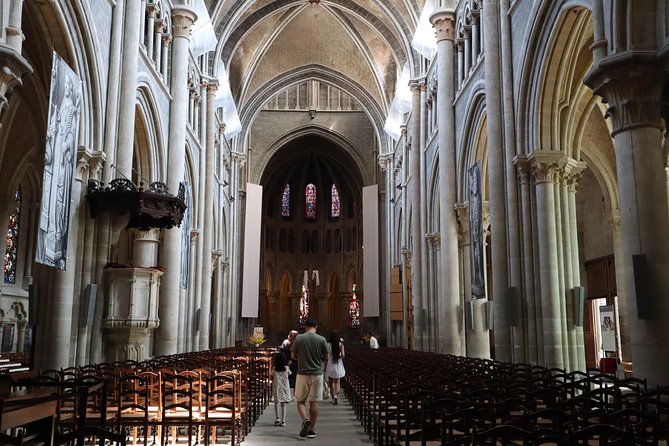
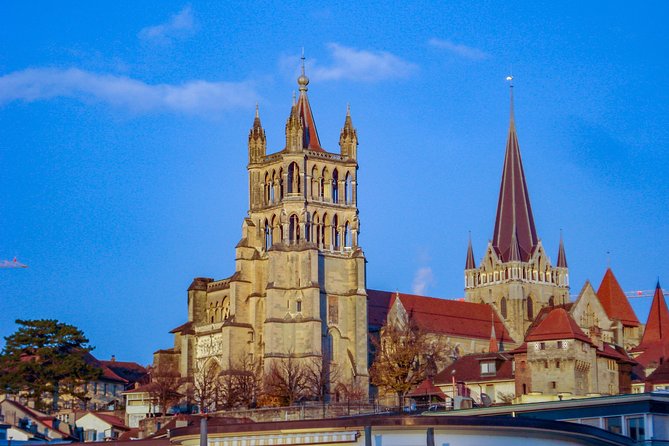
Lausanne Cathedral is the emotional centre of the route. The description of the tour calls attention to its Gothic architecture and religious importance, and one especially positive account praised the cathedral as the most striking part of an informative walk through the old centre.
I would give this stop your full attention. Gothic churches make more sense when someone points out the details, explains their civic role, and places them within the life of the city. The cathedral is not simply an impressive building to tick off. It helps explain why the surrounding streets developed as they did.
You may be able to enter during the visit, but do not assume that a long interior tour or special access is included. Entry tickets for monuments are excluded, and conditions can change with the weather or other local factors. The stop may also vary depending on the day.
One useful detail comes from a separate tour experience with a guide named Thomas. The group heard an organ play at two churches during its Old Town visit. That is not a guaranteed feature of this experience, but it suggests a worthwhile question to ask your guide: if music is important to you, ask whether any church service, organ performance, or open interior can fit the schedule.
Escaliers du Marché and the old centre
The Escaliers du Marché is one of the most atmospheric parts of the walk. This historic staircase links the city centre with the cathedral and gives you a direct sense of Lausanne’s steep arrangement. It is a traditional route rather than a polished attraction, which is precisely why it can be more revealing.
I like stops such as this because they show how residents moved through the city before modern roads and transit shaped daily routines. The stairs also create a natural change of pace. After the formal scale of the cathedral, you get a closer look at the lanes, steps, and small transitions that give the old centre its character.
This is also where the walking requirement becomes clear. The tour is not recommended for people with impaired mobility. Service animals are allowed, and most participants can take part, but steep streets and stairs may still be uncomfortable. If anyone in your group has mobility concerns, ask the operator about the likely route before booking rather than relying only on the general participation note.
Something different, still within reach of Lausanne:
- The Olympic Museum Entrance Ticket in Lausanne
★ 4.5 · 211 reviews - Vine Stories: Lavaux & Lutry wine walk
★ 5.0 · 67 reviews - Riviera Col du Pillon & Glacier 3000 from Lausanne
★ 5.0 · 32 reviews - (KTL352) – Gruyeres Day Trip with Chocolate Factory from Lausanne
★ 4.0 · 17 reviews
Château Saint-Maire and medieval government
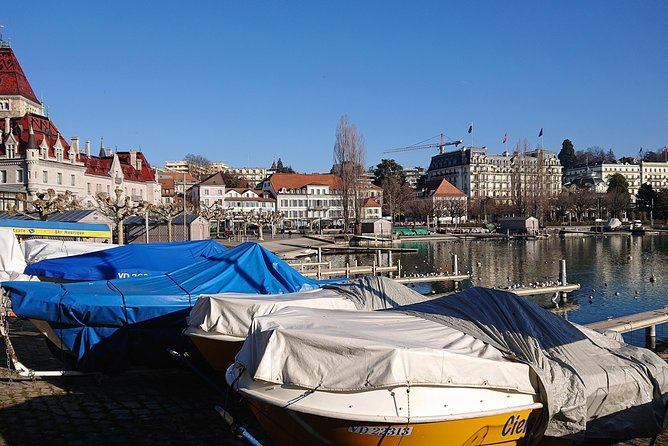
Château Saint-Maire, on Rue de la Barre, adds a civic side to Lausanne’s story. The building once served as a residence for bishops and now functions as a government site. That change gives the stop a useful theme: Lausanne’s religious authority, political administration, and modern public life have all occupied the same historic setting.
The castle is likely to appeal to you if you enjoy seeing how old buildings remain part of a working city. It is not presented as a separate castle excursion with a long interior visit. Instead, it forms part of the walking narrative, allowing the guide to explain the building’s purpose and place in the city.
Because the itinerary is tailored, this is a good stop for questions. You might ask how the building relates to the cathedral, how Lausanne’s administration changed, or which parts are accessible to the public. The guide may not be able to answer every specialist question, but a private format gives you room to ask.
Palais de Rumine at Place de la Riponne
The Palais de Rumine is the route’s major culture and education stop. At Place de la Riponne, its architecture and museums point to Lausanne’s role as more than a pretty lakeside city. The building houses several important museums and reflects the city’s investment in learning and public culture.
The practical limitation is time. A two-hour walking tour can introduce the Palais de Rumine, but it cannot do justice to several museums inside. Admission is not included, so I would treat this as a useful preview and return later if one of the collections catches your interest.
You may find this stop especially useful if you are deciding how to spend a free afternoon. Ask the guide which museums suit your interests and how much time to allow. Since the itinerary can adapt to your preferences, you may be able to spend longer discussing the building, although that would mean less time elsewhere.
Rue de Bourg, from old route to shopping street
Rue de Bourg changes the tone of the walk. Known as a prominent shopping street, it combines historic buildings with the everyday energy of central Lausanne. Here you see urban development in a more ordinary setting, with commerce replacing the formal religious and civic focus of the earlier stops.
I appreciate including a street like this because it keeps the tour from becoming a procession of monuments. You get a sense of how the historic centre is used now. The guide can point out older façades, explain how the area developed, and offer suggestions for returning after the tour.
This is also a good place to ask for practical recommendations. If you want a café, a shop, or a street worth revisiting, the guide’s local perspective may be more helpful than a generic list. Since personal expenses are excluded, plan to pay separately for anything you buy along the way.
Esplanade de Montbenon and the open-air pause
The Esplanade de Montbenon, on Allée Ernest-Ansermet, provides a welcome change from narrow streets and staircases. It is a public space with broad views and a calmer feel, showing how Lausanne balances dense urban areas with open places for rest.
After the cathedral quarter and Rue de Bourg, Montbenon gives you room to pause and take in the city from a different angle. I would use this stop to ask the guide how Lausanne’s central districts connect and which areas deserve more time.
The exact order may change. The itinerary adapts to walking speed and interests, and stops can vary with weather. That flexibility is useful, but it also means you should not treat the route as a rigid checklist. If Montbenon matters to you, mention it at the beginning.
Finishing at the Musée de l’Elysée
The walk ends at the Musée de l’Elysée, at Place de la Gare 17, near Lausanne’s railway station. This photography museum gives the tour a modern artistic finish after its concentration on medieval and civic buildings.
You should not expect the museum admission to be part of the tour. Entry fees for museums are excluded, so the guide’s role is to introduce the institution and Lausanne’s visual arts scene rather than provide a full museum visit.
The ending point is practical. A railway station location makes it easy to continue elsewhere, return to your accommodation, or plan a separate museum visit. It also means the tour does not finish back at Bessières Bridge, so check your onward route before you begin. The final location may be convenient, but it is not the same as being returned to your starting point.
How much value do you get for $211.21?
At $211.21 per person, this tour is expensive for two hours if you judge it by duration alone. The cost makes more sense if you are booking for a small private group, value a tailored route, and want a local person to shape your first look at Lausanne.
Group discounts may improve the calculation. The advertised price is per person, so the final cost depends on the size of your group and any discount offered at booking. I would compare the total private price with the cost of a shared walking tour, then ask what matters more to you: saving money or having control over the pace and conversation.
You are paying for several things beyond foot travel:
- A private guide for your group only
- An itinerary that can respond to your interests
- Local suggestions for the rest of your stay
- A route joining major landmarks with less formal city streets
- The ability to ask questions without competing with a large group
You are not paying for museum entry, monument tickets, public transportation, or personal purchases. That matters because the price can rise if you add indoor visits afterward.
For a solo visitor, the price is hard to justify unless personal attention is especially important. For a couple or family that wants a private introduction, the value is stronger, particularly if the guide gives useful advice that shapes the next day or two in Lausanne.
Who should book this private walk?
I would recommend it to first-time visitors who want a quick sense of Lausanne before exploring alone. It also suits people who enjoy architecture, church interiors, civic history, and photography, since the route connects all four themes.
Families and small groups may appreciate the private setup. You can ask the guide to slow down, focus on children’s interests, or skip a stop that does not appeal to you. The walking pace is adaptable, which is more useful in a private tour than in a fixed group.
This is less suitable if you want a long museum visit, a low-cost activity, or a completely level route. It is also a poor match for anyone with impaired mobility unless the operator confirms that an adjusted route is possible.
The independent guide model means the quality may depend on the individual host. One guide, Thomas, received especially warm praise for making an Old Town visit enjoyable and for arranging memorable church music moments. At the same time, one serious complaint described a guide no-show after an early arrival. I would keep the booking confirmation, verify the meeting point and start time, and contact the provider if anything looks unclear.
Free cancellation is available if you cancel at least 24 hours before the start time. Changes or cancellations inside that window are not accepted for a refund, so check the local time carefully.
Should you book Historic Lausanne?
Book this tour if you want a private introduction rather than a cheap checklist. The route gives you Lausanne’s main historic sights, a few useful street-level connections, and a finish near a major photography museum and the railway station. The cathedral, Escaliers du Marché, and Bessières Bridge are especially good reasons to choose it.
Skip it if $211.21 per person feels too high for two hours, or if you mainly want museum interiors and detailed monument access. In that case, you can use the route as a self-guided plan and spend your money on admissions instead.
My practical advice is to book this for your first day in Lausanne, ask for the interests you want prioritized, and confirm the meeting arrangements shortly before the walk. With the right guide, this can give you a useful sense of the city’s shape and character in a short time.
FAQ
How long does the Historic Lausanne private tour last?
The tour lasts approximately two hours.
Where does the tour begin?
The meeting point is Bessières Bridge, also called Pont Charles Bessières, at 1003 Lausanne, Switzerland.
Where does the tour end?
The tour ends at the Musée de l’Elysée, Place de la Gare 17, 1003 Lausanne, Switzerland.
Is this a private tour?
Yes. Only your group participates, and the experience includes an exclusive private tour with an independent local guide.
Can the itinerary be changed?
The itinerary adapts to your interests and walking pace. Stops may also vary depending on weather conditions.
Are museum and monument tickets included?
No. Entry tickets for transportation, museums, and monuments are excluded from the tour price.
Is the tour suitable for people with impaired mobility?
The tour is not recommended for people with impaired mobility. The route includes walking through Lausanne’s historic streets and the Escaliers du Marché.
Are service animals allowed?
Yes. Service animals are allowed on the experience.
Can I cancel for a full refund?
Yes, if you cancel at least 24 hours before the experience start time. Cancellations or changes made less than 24 hours before the start time are not refunded or accepted.
Just added around Lausanne
- Explore Lausanne in 60 minutes with a Local★ 4.0 · 3 reviews
- (KTL303) – Winter Tour Montreux and Chaplin’s World from Lausanne★ 5.0 · 7 reviews
- Lausanne Foxtrail Citi★ 4.5 · 7 reviews
- Panoramic Wine Tour From Lausanne★ 5.0 · 8 reviews
- Explore Lausanne in 60 minutes with a Local★ 3.0 · 8 reviews
- (KTL364) – Small group tour Jungfrau and Interlaken from Lausanne★ 4.5 · 9 reviews
- (KTL361) – Interlaken day trip by bus from Lausanne★ 4.5 · 9 reviews
- Winter Gruyères, chocolate & cheese tour from Lausanne★ 4.5 · 10 reviews
Historical Tours, compared.
Highlights of Geneva: Dark History Quest Experience
Read our review →
Historical Zürich: A Self-Guided Audio Tour Through the city of 1,000 Fountains
Read our review →
Private Mystic Zermatt Tour: Peaks, History & Culture
Read our review →Browse the lists this tour appears in