
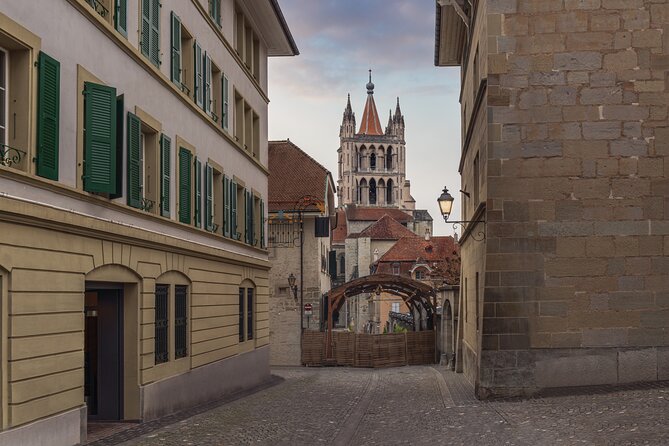
Review · 1-HOUR EXPERIENCES
Explore Lausanne in 60 minutes with a Local
Lausanne rewards a quick start. This compact walking tour introduces the city through its old town, cathedral, civic squares, and local perspective, making it useful if you have only an hour between trains or other Swiss stops. I like the small-group format and the chance to ask a local guide for personal recommendations rather than follow a large, rigid tour. I also like that the route ends at Montbenon, giving you a useful place to continue exploring.
The main drawback is the price: $98.29 per person for roughly one hour to one hour and 30 minutes is a serious charge for a short introduction. The quality may also depend heavily on your guide. Feedback describes Nikola as pleasant but light on historical detail, while Cristian or Christian adapted well to very cold weather and even changed the format to a car-based visit.
In This Review
- Key points to know before booking
- Why this short Lausanne tour can work well
- Starting near Palais de Rumine
- The former bishops’ castle and Lausanne’s government center
- Lausanne Cathedral and the payoff above the old city
- Escaliers du Marché, the old city’s wooden shortcut
- Place de la Palud and the animated clock
- Finishing at Esplanade de Montbenon
- Small groups, changing routes, and guide quality
- Is $98.29 good value?
- Who should book this Lausanne walk?
- Booking, meeting, and cancellation details
- Should you book it?
- FAQ
- Where does the Lausanne tour begin?
- Where does the tour end?
- How long does the experience last?
- How many people can join the tour?
- What sights are included in the route?
- Are museum and monument tickets included?
- Is the tour suitable for people with impaired mobility?
- Can the itinerary change?
- What is the cancellation policy?
Key points to know before booking
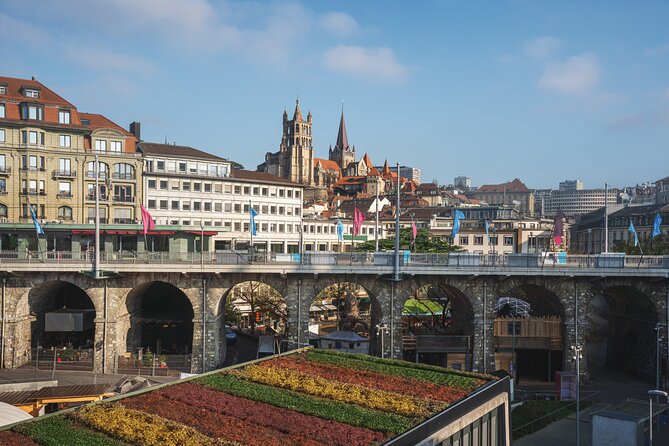
- The route links five central Lausanne sights, including Palais de Rumine, the bishops’ former castle, Lausanne Cathedral, the wooden Escaliers du Marché, and the clock-filled Place de la Palud.
- The group is small, with the tour described as accommodating up to six people in one place and up to eight in the additional details. Confirm the exact group size if that matters to you.
- The guide can adapt the pace and route to your interests and weather, though monument and museum entry is not included.
- The price is high for a short orientation, so the value rests on the guide’s personal insight and recommendations.
- The walk is not suited to impaired mobility, since Lausanne’s old center includes slopes, stairs, and uneven routes.
- The tour ends at Esplanade de Montbenon, not back at the starting point, which is useful for continuing your visit but worth planning around.
Why this short Lausanne tour can work well
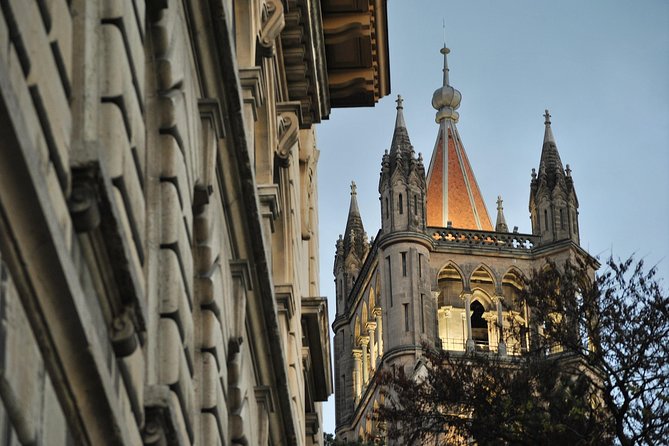
Lausanne is not a city you understand from one grand avenue. Its character comes from the shift between steep old streets, formal civic buildings, religious monuments, and open viewpoints. A local-led walk can help you connect those pieces quickly.
This tour is designed for exactly that first impression. You meet near the Palais de Rumine, move through the historic center, and finish at Esplanade de Montbenon. The route gives you several recognizable landmarks without asking you to commit half a day.
I would consider it most useful on a first visit, especially if you are staying briefly or arriving with no clear plan. The guide is meant to explain local life, changes in the city, and places worth returning to later. That personal advice may be more useful than a long list of dates.
Still, keep your expectations in check. This is an orientation walk, not a full historical tour. At the stated price, you should expect an engaging guide who answers questions and adds local color. If you want detailed architectural or political history at every stop, one hour may feel thin.
A few more trips and experiences worth a look
- Explore Lausanne in 60 minutes with a Local
★ 4.0 · 3 reviews - Lake Lucerne 1-Hour Catamaran Cruise
★ 3.5 · 98 reviews - Explore Basel in 60 minutes with a Local
★ 4.5 · 29 reviews
Starting near Palais de Rumine
The published starting information gives Rue de la Barre 1, 1005 Lausanne, while the meeting description places the group in front of BENU Pharmacie Gamma at the Palais de Rumine. Those details point to the same general central area, but I would check the confirmed meeting instructions before setting out.
Palais de Rumine is a strong opening point. The building houses fine arts, history, and science collections in a Florentine Renaissance-style setting. Even if you do not enter, the exterior gives the tour an immediate sense of Lausanne’s civic ambition.
Because museum entry is not included, you should treat the building as a landmark unless your guide says otherwise. There is not enough time in this format to properly visit several collections and still complete the route.
I like this beginning because it lets you see how Lausanne presents culture in a grand public setting. You also start with a practical question: which museums or exhibits deserve a return visit? Ask your guide directly. Personal recommendations are one of the main reasons to pay for a local-led walk.
The former bishops’ castle and Lausanne’s government center
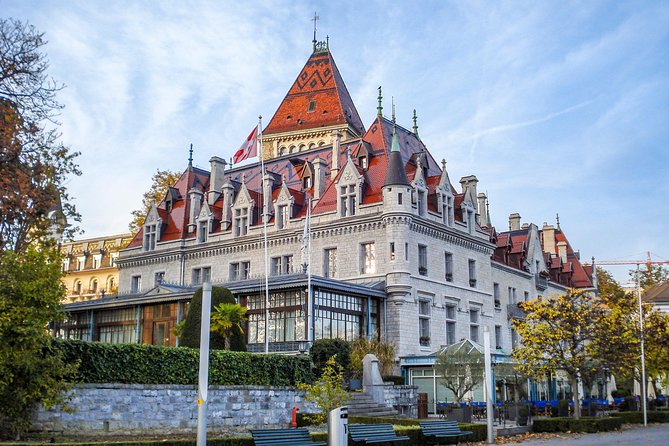
The route continues to a striking 15th-century castle that once housed bishops and now serves as a government palace. Its Gothic architecture gives you a clear reminder that Lausanne was not simply a modern Swiss business center. Religious power once shaped the city’s institutions and skyline.
The stop is likely to be visual rather than an interior visit, since entrance tickets for monuments are excluded. That is not a problem for a short walk, but it limits how much time you can spend examining rooms, displays, or detailed exhibits.
Here, I would ask the guide to explain the building’s change from ecclesiastical residence to government use. That transformation is exactly the sort of city change the tour promises to discuss. If the guide offers only a brief identification and a photo stop, the experience may feel underdeveloped.
This is also where the small group can help. With only a handful of people, you can ask why the castle matters today, how local government uses the building, and what other parts of Lausanne reflect the same shift from religious authority to civic life.
Lausanne Cathedral and the payoff above the old city
Lausanne Cathedral is the route’s major monument. This Gothic church is known for its finely carved portal and panoramic views from the tower. Those two features give you both close-up detail and a broad sense of the city.
The key practical point is that tower access is not included. If you want to climb, you may need extra time and an additional ticket, and the one-hour format may not allow it. Ask before the tour begins if reaching the tower is important to you.
Even without going up, the cathedral gives the walk a strong center. Its carved portal rewards a slower look, so do not let the schedule rush you past it. This is one place where the guide’s commentary can make a major difference. A guide who points out the portal’s details and explains the building’s place in Lausanne will give you more than a quick photograph.
The cathedral also helps you understand the city’s vertical shape. Lausanne’s center is built on slopes, and the old streets around the church require steady walking. That makes comfortable shoes a simple but important choice.
Something different, still within reach of Lausanne:
- The Olympic Museum Entrance Ticket in Lausanne
★ 4.5 · 211 reviews - Vine Stories: Lavaux & Lutry wine walk
★ 5.0 · 67 reviews - Riviera Col du Pillon & Glacier 3000 from Lausanne
★ 5.0 · 32 reviews - (KTL352) – Gruyeres Day Trip with Chocolate Factory from Lausanne
★ 4.0 · 17 reviews
Escaliers du Marché, the old city’s wooden shortcut
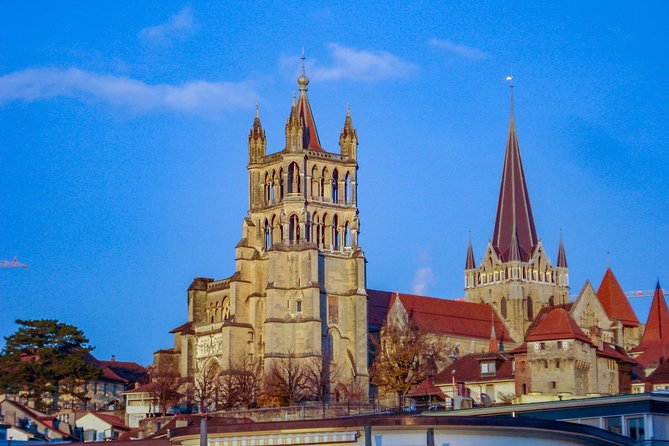
The historic wooden stairway connecting the market area with the cathedral is one of the route’s most appealing small-scale sights. It is less monumental than the cathedral, but it shows how Lausanne’s old center works in daily life.
The stairway is picturesque, yet it is also practical. It connects two levels of the city and gives you a close look at the old town’s steep layout. This is the kind of place that is easy to miss if you only visit Lausanne by bus or follow the broadest streets.
It is also the clearest reason this walk may not suit people with impaired mobility. Stairs and slopes are built into the route, and the itinerary can change with weather. The extra information says the walk adapts to the group’s pace, but that does not remove the physical demands of the old center.
I would take this section slowly. Ask your guide where the market area sits in relation to the cathedral and how local people use the route today. The value here is not just the wooden construction. It is seeing how the city’s old infrastructure still shapes movement.
Place de la Palud and the animated clock
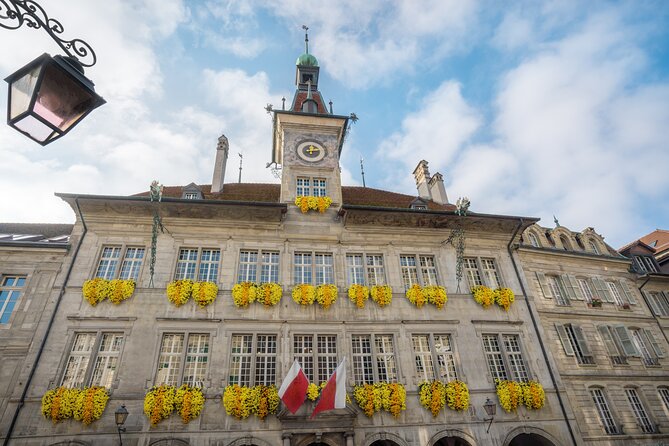
The walk reaches the heart of Lausanne at a lively square with the town hall and an animated clock that recounts local history each hour. This is a good place to pause and connect the city’s political center with its commercial and social life.
The clock is time-sensitive, so the exact experience may depend on when your tour passes through. If seeing the animation matters to you, ask the guide about the hourly schedule at the start. The tour lasts only about an hour to an hour and 30 minutes, so timing can make a difference.
The square should also help you get your bearings for later independent exploring. It links the old city’s main points and gives you a recognizable place to return to after the tour. I value stops like this because they turn a guided route into a useful map for the rest of your day.
The tour promises information about local lifestyle, not just monuments. This square is the natural place to test that promise. Ask where locals shop, eat, or spend time, and request recommendations that fit your own interests and budget.
Finishing at Esplanade de Montbenon
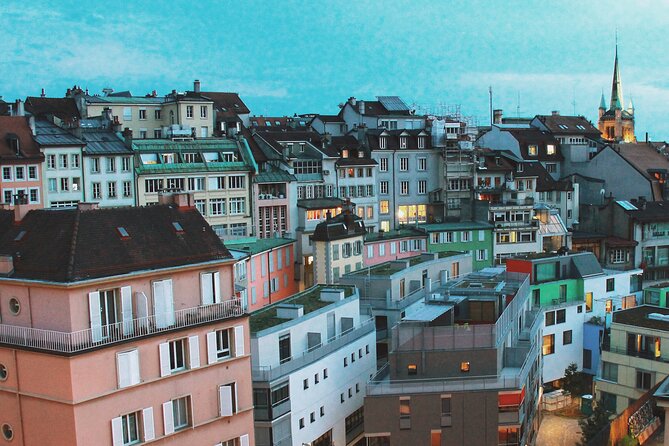
The official ending point is Esplanade de Montbenon at Allée Ernest-Ansermet 3. The tour does not return to the starting point, so plan your onward route before you arrive.
Ending here gives the walk a different mood from the narrow old streets. You finish in a broad open setting with a useful view across the city area. The tour description presents the end as a starting point for your own Lausanne visit, and that is the right way to use it.
You can ask your guide for a final recommendation before saying goodbye. Since personalized suggestions are included, this is the moment to ask for help choosing what to do next, where to eat, or which museum deserves your remaining time. The guide may also suggest areas that are not covered in the short route.
The practical advantage is clear: you finish with a sense of direction rather than being dropped back at the same meeting point. The downside is that Montbenon may not be convenient for every next stop, so allow a little time to reach your hotel or station.
Small groups, changing routes, and guide quality
The tour is promoted as a small-group experience. One section says six people maximum, while the additional details specify up to eight. That difference is worth noting. Either way, the group should be much more personal than a standard large walking tour.
Small groups matter most when the guide is responsive. You can ask questions without holding up a crowd, and the guide can adjust the pace to your interests. The itinerary may also change with weather or group needs.
The quality is not guaranteed to be identical on every departure. One piece of feedback describes Nikola as lovely but not strong on local history unless prompted with questions. That tells you how to get more from the tour: arrive with a few questions ready, especially about Lausanne’s political changes, local customs, and favorite places to eat.
A different account describes Cristian or Christian responding to strong cold winds by meeting the group at Lausanne station and offering a car-based format from Tibits restaurant. That was praised for being structured and for making good use of the guide’s local knowledge. It also shows that flexibility can matter when weather makes a normal walk unpleasant.
Do not assume a car option is part of every booking. Treat that account as an example of adaptation, not a guaranteed inclusion. The standard format is a walking experience, and personal expenses and transportation tickets are not included.
Is $98.29 good value?
At $98.29 per person, this is expensive for a one-hour introduction. If the group reaches eight people and the guide gives only basic descriptions, you may feel you paid too much for a route you could have followed independently.
The value improves if you want a private-feeling group, personal recommendations, and a flexible pace. It also improves if you have limited time and would rather see the essential old-town landmarks without sorting out the route yourself.
I would compare the cost with your plans for the day. If you have several hours in Lausanne, you may get better value from a longer guided walk or by visiting one museum and exploring the old center on your own. If you have a narrow gap between transport connections, the tour’s compact format may be exactly what you need.
The average booking point is 26 days in advance, which suggests planning ahead is sensible. That does not mean you must book that early, but small capacity can make last-minute availability uncertain.
Who should book this Lausanne walk?
I would recommend it to you if:
- You have only one to 90 minutes for an introduction to Lausanne.
- You prefer a small group over a large city tour.
- You want local recommendations for the rest of your stay.
- You enjoy asking questions and shaping the pace.
- You can manage stairs, slopes, and uneven old-town streets.
- You want to see major landmarks without paying for several separate entries.
I would be cautious if you expect a detailed lecture at every stop. I would also hesitate if your mobility is limited, if you dislike walking uphill, or if the price must deliver a long, content-heavy tour.
The guide is central to the value. A strong local can connect the buildings to modern Lausanne and make the short route memorable. A less prepared guide may leave you with little more than landmark names.
Booking, meeting, and cancellation details
You receive confirmation when you book, and a mobile ticket is available. The tour is near public transportation, and service animals are allowed.
The tour is hosted by an independent local through LocalBini, a Switzerland-focused platform for local experiences. Transportation, museum admission, monument entry, and personal expenses are not included.
You can cancel for a full refund up to 24 hours before the local start time. Cancellations or changes made within 24 hours are not refunded or accepted. The experience is not recommended for people with impaired mobility, though most other participants can take part.
Should you book it?
Book this tour if you want a fast, personal introduction and will make good use of the guide by asking questions. The route covers Lausanne’s most useful first sights, and the small group, flexible pace, and final recommendations can save you time.
Skip it if you want extensive history or feel $98.29 is too much for a short walk. In that case, use the same route as a self-guided orientation, then spend your money on the cathedral tower or a museum entry if available.
My decision would depend on the guide and the schedule. For a short stop in Lausanne, it can be worthwhile. For a full day in the city, it is less convincing unless personal guidance matters more to you than length.
FAQ
Where does the Lausanne tour begin?
The listed starting point is Rue de la Barre 1, 1005 Lausanne. The meeting description also refers to BENU Pharmacie Gamma in front of the Palais de Rumine, so check the confirmed meeting instructions before arrival.
Where does the tour end?
The tour ends at Esplanade de Montbenon, Allée Ernest-Ansermet 3, 1003 Lausanne.
How long does the experience last?
The estimated duration is one hour to one hour and 30 minutes.
How many people can join the tour?
The experience is described as a small-group tour. One description gives a maximum of six people, while the additional information gives a maximum of eight travelers. Confirm the exact capacity when booking.
What sights are included in the route?
The route includes Palais de Rumine, a former bishops’ castle, Lausanne Cathedral, the historic wooden stairway near the market and cathedral, and the square with Lausanne’s town hall and animated clock.
Are museum and monument tickets included?
No. Entry tickets for transportation, museums, and monuments are excluded from the price.
Is the tour suitable for people with impaired mobility?
No. The experience is not recommended for people with impaired mobility, and the old-town route includes stairs and sloping streets.
Can the itinerary change?
Yes. The route can adapt to participants’ interests and walking pace. Stops may also vary depending on weather conditions.
What is the cancellation policy?
You can cancel at least 24 hours before the start time for a full refund. Cancellations and changes made less than 24 hours before the start time are not accepted, and the amount paid is not refunded.
Just added around Lausanne
- Explore Lausanne in 60 minutes with a Local★ 4.0 · 3 reviews
- Historic Lausanne: Exclusive Private Tour with a Local Expert★ 4.0 · 5 reviews
- (KTL303) – Winter Tour Montreux and Chaplin’s World from Lausanne★ 5.0 · 7 reviews
- Lausanne Foxtrail Citi★ 4.5 · 7 reviews
- Panoramic Wine Tour From Lausanne★ 5.0 · 8 reviews
- (KTL364) – Small group tour Jungfrau and Interlaken from Lausanne★ 4.5 · 9 reviews
- (KTL361) – Interlaken day trip by bus from Lausanne★ 4.5 · 9 reviews
- Winter Gruyères, chocolate & cheese tour from Lausanne★ 4.5 · 10 reviews
1-Hour Experiences, compared.

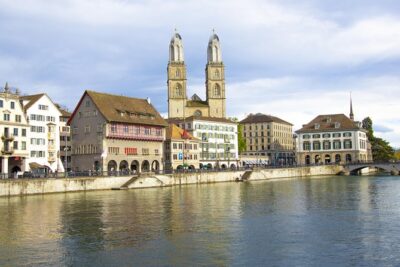
Private Tour of Zurich in 60 minutes with a Local
Read our review →
Browse the lists this tour appears in