

Review · HISTORICAL TOURS
Zürich Historic District Tour
Look beneath Zürich’s polished surface. This two-hour walk pairs major Old Town sights with easy-to-miss corners, from the Polybahn viewpoint to old walls beneath the streets. I especially like the small group limit of 16 and the way the route mixes famous churches with private courtyards, basement ruins, and local stories.
The tour is also a smart first activity in Zürich. Guides such as Maria, Ariadni, Alexander, and Arianna have been praised for clear storytelling, patient pacing, restaurant suggestions, and good photo stops. The main drawback is the pace: you cover a lot of ground on foot, and the route is not suited to people with mobility problems. Entry fees for the Polybahn and Fraumünster are also extra.
In This Review
- Key points to know before you book
- Starting in Niederdorf with Zürich at your feet
- Riding the Polybahn to the Polyterrasse
- Old walls at the Zentralbibliothek
- Brunngasse and a private glimpse indoors
- Spiegelgasse and Lenin’s Zürich address
- Grossmünster’s quieter corners
- Fraumünster and the Chagall windows
- Wasserkirche, ruins, and the story of Felix and Regula
- Lindenhof Hill and the final underground stop
- What makes the guiding effective
- Walking conditions, weather, and family suitability
- Is $43.94 a fair price?
- Who should book this Zürich walk?
- Final verdict: a strong first look at Zürich
- FAQ
- How long does the Zürich Historic District Tour last?
- Where does the tour start?
- Where does the tour end?
- What language is the tour offered in?
- What is included in the tour price?
- Are entrance fees included?
- How many people can join the tour?
- Is the tour suitable for people with mobility problems?
- Can I cancel for a full refund?
Key points to know before you book
- The Polybahn opens with a view: A short ride carries you up to the Polyterrasse, one of the best quick outlooks over central Zürich.
- The route finds overlooked history: You may see old fortification walls, underground ruins, a private building with an old picture, and a former Lenin residence.
- The churches add real depth: Grossmünster, Fraumünster, and Wasserkirche each offer a different look at Zürich’s past.
- It works well on your first day: The walk gives you a useful mental map of the Old Town before you explore alone.
- Expect a proper walking tour: Wear good shoes, allow about two hours, and be ready for stairs, uneven streets, and standing.
- Small groups help: A maximum of 16 people makes it easier to hear the guide and ask questions.
Starting in Niederdorf with Zürich at your feet
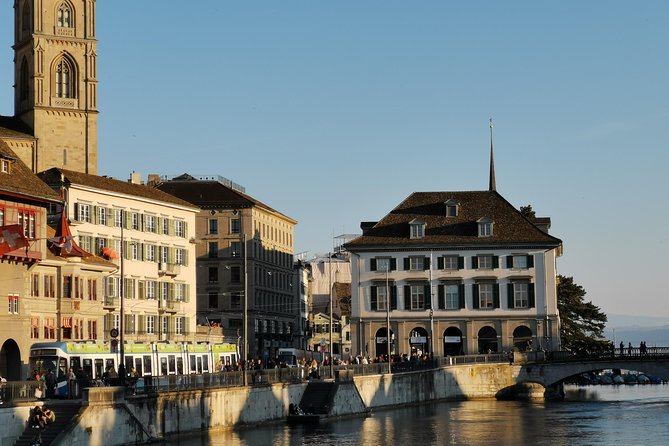
The meeting point is at Hirschen, Niederdorfstrasse 13, in Zürich’s central Old Town. This is a practical place to begin because you are already in one of the city’s most atmospheric districts, with narrow lanes and historic buildings close at hand.
From there, the tour starts on foot and soon reaches the Central Polybahn. The route ends back at the same meeting point, so you do not need to arrange a separate pickup or figure out where the walk finishes.
The tour is offered in English and lasts about two hours. That is enough time for a useful introduction, but not enough for long interior visits or detailed museum-style lectures at every stop. I would treat it as a well-paced orientation walk, not as a complete study of Zürich.
The group can include up to 16 people. That is large enough to provide energy but still modest by city-tour standards. One useful detail from the tour’s feedback is that guides have continued with very small groups, even when only two people were booked. That can make the experience feel more personal.
A few more trips and experiences worth a look
- Historical Zürich: A Self-Guided Audio Tour Through the city of 1,000 Fountains
★ 5.0 · 11 reviews - Basel Historical Old Town Tour
★ 4.0 · 99 reviews - Highlights of Geneva: Dark History Quest Experience
★ 4.0 · 16 reviews
Riding the Polybahn to the Polyterrasse
The Central Polybahn is a funicular railway with a short, unusual ride up the hill. It is one of the tour’s most appealing opening moves because you get an immediate change of perspective without spending much time or effort climbing.
The admission ticket is not included, so you should budget for that separately. The supplied information does not state the current fare, so check locally when you book or arrive.
At the Polyterrasse beside ETH Zürich, the tour pauses for about 10 minutes. This is a viewpoint rather than a long sightseeing stop. You can expect a broad look across the city, with the guide explaining the layout and pointing out features that will make more sense as the walk continues.
I like this early stop because it gives you orientation before the streets start to blur together. You see Zürich from above, then spend the rest of the tour connecting that view to the lanes, churches, riverfront buildings, and hills below.
The view also makes this a useful stop for photographs. One guide, Maria, was praised for knowing good picture spots, and the Polyterrasse is clearly one of the route’s strongest chances for a city panorama.
Old walls at the Zentralbibliothek
The route then returns to street level near the Zentralbibliothek, Zürich’s central library. Here, you learn about parts of the old city wall and defensive system.
This is the kind of stop I value on a walking tour. A church tower or grand square announces itself, but fragments of fortification can be easy to miss unless someone explains what you are looking at. The remains help you picture Zürich as a contained medieval town rather than the modern financial center you see today.
The stop lasts about 10 minutes and admission is free. You are not being asked to spend time in a major museum. Instead, the guide uses the city itself as the exhibit.
That approach also explains why the tour works well for a short stay. You are not confined to one building or dependent on opening hours at every stop. The streets provide the setting, while the guide supplies the links between past and present.
Brunngasse and a private glimpse indoors
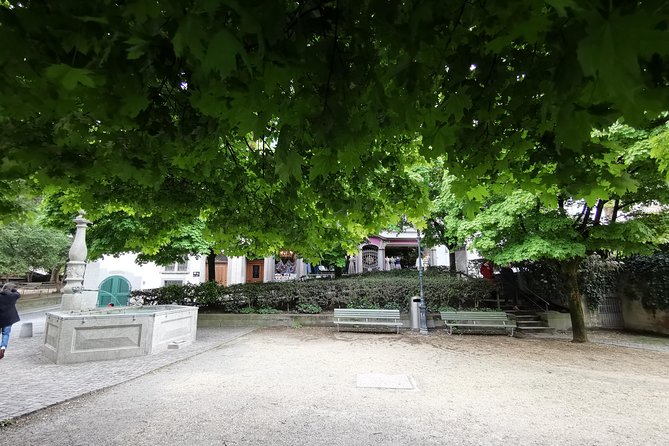
At Brunngasse, the tour visits an old picture inside a private building. This is one of the route’s more unusual features because it takes you beyond the standard church-and-square circuit.
Access to a private building can depend on circumstances, so I would not treat this as a guaranteed major interior visit. The important point is the type of experience: you may see a piece of old Zürich in a place most people would simply walk past.
The stop is listed at about 10 minutes and is free. It should appeal to you if you enjoy small details, local access, and stories attached to ordinary buildings. If your main goal is grand architecture, this part may feel modest. Its value comes from the setting and the explanation, not from the size of the attraction.
This is also where a good guide matters most. Without context, an old picture inside a private building might not mean much. With a clear explanation, it becomes part of the city’s longer story.
Something different, still within reach of Zürich:
- Mount Titlis and Lucerne Day Trip from Zurich
★ 4.5 · 1,960 reviews - Heidiland and Liechtenstein Tour from Zurich
★ 4.0 · 1,745 reviews - Jungfraujoch: Top of Europe Day Trip from Zurich
★ 4.5 · 1,647 reviews - Jungfraujoch Day Trip from Zurich: Swiss Alps & Bernese Oberland
★ 4.5 · 1,409 reviews
Spiegelgasse and Lenin’s Zürich address
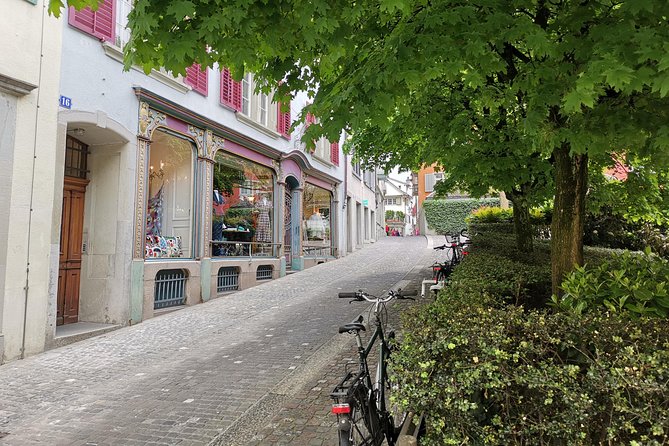
Spiegelgasse is another compact stop, lasting about five minutes. The tour points out the place where Lenin lived during his time in Zürich.
That detail gives the Old Town a human connection to modern European political history. It also shows how much the city’s lanes have seen beyond guild halls, churches, and medieval walls.
Because the stop is short, expect an explanation from outside rather than a long interior visit. The point is to locate the address and understand its place in Zürich’s story. It is a good example of the route’s method: the guide turns a normal-looking street into a meaningful stop.
You will likely appreciate this more if you enjoy history told through people and places. If political history is not your interest, it is still a quick and easy addition rather than a detour.
Grossmünster’s quieter corners
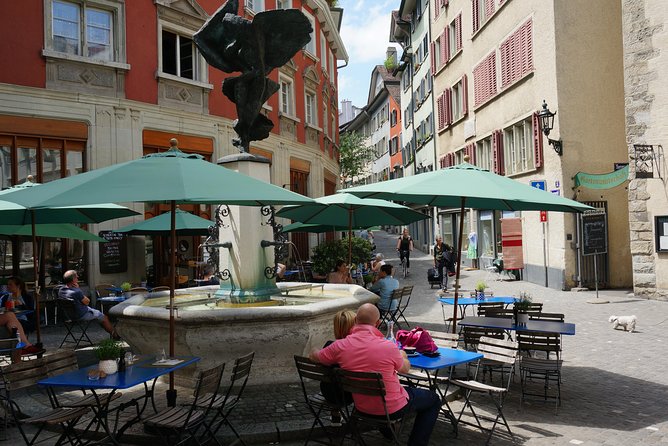
Grossmünster is one of Zürich’s best-known landmarks, but this tour focuses on parts that are easy to overlook. The route includes a concealed cloister and a prayer room with a medieval baptismal font.
The stop lasts around 15 minutes and admission is free. That gives you enough time to look around while the guide explains what you are seeing, though the visit is not designed as an extended architectural study.
The cloister and baptismal font help shift your attention away from the church’s famous exterior. You get a sense of how religious buildings functioned as living parts of the city, not simply as picture stops.
Several people who took the walk praised the guides for showing places they would never have found alone. Grossmünster is a good example of that promise. You can find the church yourself, but locating a quieter cloister or a less obvious devotional space is another matter.
Fraumünster and the Chagall windows
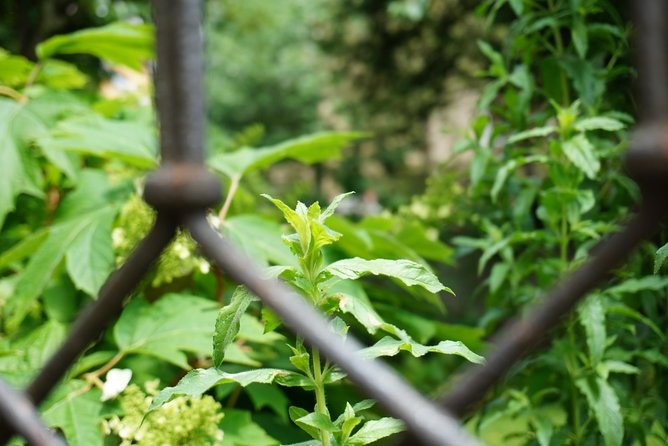
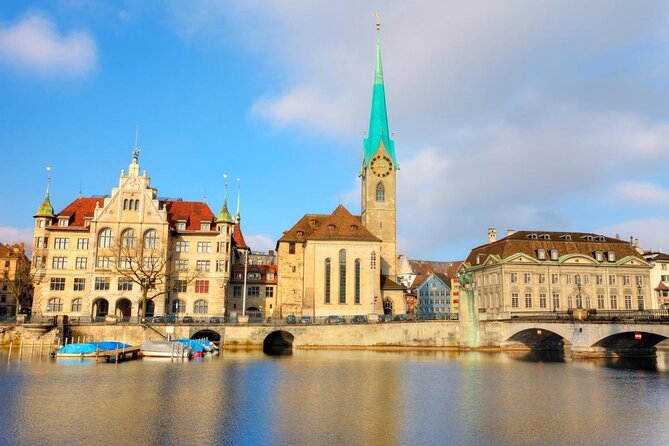
The route continues to Fraumünster Church, with about 15 minutes set aside for the Chagall windows. These colorful windows are among Zürich’s most recognizable works of modern religious art.
Admission is not included, so plan to pay separately. The tour’s listed price covers the guide, but not all fees and taxes, food, drinks, or a tip. The extra church admission is worth keeping in mind when comparing the total cost.
The short visit should give you time to see the windows and hear their place in the church. It will not be enough for a slow, detailed examination of every interior feature, especially if the church is busy.
Still, the inclusion is valuable because it breaks up the medieval focus. The tour moves from defensive walls and old churches to a modern artistic interpretation of faith. That contrast gives you a fuller sense of Zürich than a route devoted only to its oldest buildings.
Opening conditions can affect what you see. One couple found that Sunday closures limited access to some interior settings, so a weekday booking may be preferable if seeing as many indoor spaces as possible matters to you. The provided tour details do not promise entry to every interior on every departure.
Wasserkirche, ruins, and the story of Felix and Regula
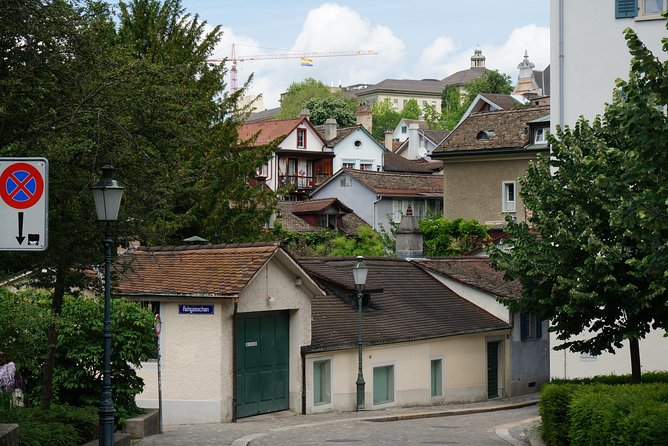
At Wasserkirche, the tour spends about 15 minutes with underground ruins and the execution site associated with Felix and Regula. Admission is free.
This is another stop where the setting does much of the work. The church sits in the heart of the Old Town, yet the underground remains point to earlier layers beneath the streets. The guide helps you connect the visible building with the older site below it.
The story of Felix and Regula adds a strong local religious tradition to the walk. You do not simply hear dates and names. You get a story tied to a specific place, which makes it easier to remember.
The underground portion may involve steps or constrained access. The tour is not recommended for people with mobility problems, and a moderate level of physical fitness is advised. If you are unsure about stairs or uneven surfaces, contact the provider before booking.
Lindenhof Hill and the final underground stop
Lindenhof Hill is the final listed sightseeing stop and includes historical ruins underground. The route then returns to the original meeting point.
Lindenhof is useful as a closing stop because it brings together the tour’s main themes: views, old defenses, layers beneath the city, and Zürich’s changing shape. The hill is also a natural place to pause and review what you have seen.
The underground ruins make the stop more than a viewpoint. Again, the tour encourages you to look below the current street level and imagine earlier versions of the city.
The timing deserves a practical note. The listed stops add up to more than the stated two-hour duration when counted individually, and time is also needed to walk between them. Treat the schedule as approximate. Your guide may shorten a pause, adjust the order, or spend more time at a place that interests the group.
What makes the guiding effective
The strongest part of this experience is the guiding. Maria is repeatedly praised for her local perspective, friendly manner, patient pace, and ability to answer questions. She has adjusted the walk for heat, shared an umbrella during rain, and added extra sights when a small group moved quickly.
Arianna and Ariadni are also praised for making the tour personal and informative. Alexander has been noted for keeping children engaged with humor and clear stories. These details suggest that the experience depends somewhat on the individual guide, but the overall approach is consistent: explain the city through places, anecdotes, and practical orientation.
The guides also appear willing to tailor the walk to the group. That can mean extra sites, restaurant recommendations, photo stops, or a slower pace. You should not assume every departure will include the same additions, but flexibility is a clear strength.
There is one useful criticism to keep in mind. One person found the guide difficult to hear at times. In a street setting, traffic, crowds, and church acoustics can make this worse. Stay near the guide, ask for repetition when needed, and do not hesitate to mention the issue politely.
Walking conditions, weather, and family suitability
Good walking shoes are essential. The route covers the Old Town on foot and includes hills, old streets, and underground areas. A moderate fitness level is recommended, and the tour is not suitable for people with mobility problems.
Children must be accompanied by an adult. The available feedback suggests that children can enjoy the walk when the guide uses humor and stories, but the two-hour format still requires standing and walking. Very young children may find the historical explanations less engaging.
Weather can change the feel of the tour. One guide kept the pace comfortable during a hot evening, with rest and water breaks. Another shared an umbrella in the rain. Even so, bring weather protection and wear shoes that can handle wet or uneven pavement.
Service animals are allowed, and the meeting point is near public transportation. The tour ends back where it begins, which makes it easier to continue your day without having to cross the city to retrieve a bag or meet a driver.
Is $43.94 a fair price?
At $43.94 per person, this is not the cheapest way to wander through Zürich, but the price is reasonable if you value a guide who can open up places you would otherwise miss. The experience includes a local guide, the Polybahn ride and Fraumünster admission are extra, and food, drinks, taxes, fees, and tips are not included.
The value comes from the route’s range. In two hours, you get a viewpoint, old fortifications, private-building access, a political-history address, three religious sites, and underground remains. You also receive a basic map of the Old Town in your head, which can save time during the rest of your visit.
I would book it early if your dates are fixed. It is booked, on average, 61 days in advance, so leaving it until the last evening could limit your options. The free cancellation policy allows a full refund when you cancel at least 24 hours before the start time. Changes or cancellations inside that window are not accepted for a refund.
Who should book this Zürich walk?
I would choose this tour if you are visiting Zürich for the first time, have only a short stay, or are passing through on a connecting flight. One person used the compact format to see the city and still return to the airport in time, though you should leave your own safety margin for transport.
It also suits you if you prefer stories and local details to a long museum visit. The former Lenin residence, old picture in a private building, cat story, cloister, and underground walls add personality to the walk.
You may want a different option if you need step-free access, dislike group tours, or want a slow visit inside each church. The route is broad rather than exhaustive. It gives you enough context to explore further, but it cannot cover every corner of Zürich in two hours.
Final verdict: a strong first look at Zürich
I recommend the Zürich Historic District Tour for most first-time visitors who can walk comfortably. The best reasons to book are the excellent local guiding and the route’s mix of obvious landmarks and lesser-seen details.
Book it near the start of your stay, preferably when you can enter the churches and indoor areas you most want to see. Bring good shoes, allow extra money for the Polybahn and Fraumünster, and stay close enough to hear the guide.
If you want a quick, human introduction to Zürich rather than a checklist of monuments, this is a good use of two hours. It will not tell you everything, but it should leave you better oriented and more curious about the streets you explore next.
FAQ
How long does the Zürich Historic District Tour last?
The tour lasts approximately two hours.
Where does the tour start?
It starts at Hirschen, Niederdorfstrasse 13, 8001 Zürich, Switzerland.
Where does the tour end?
The tour ends back at the meeting point.
What language is the tour offered in?
The tour is offered in English.
What is included in the tour price?
A local guide is included.
Are entrance fees included?
The Polybahn admission and Fraumünster admission are not included. The listed information also excludes food, drinks, all fees and taxes, and tips.
How many people can join the tour?
The maximum group size is 16 people.
Is the tour suitable for people with mobility problems?
No. The tour is not recommended for people with mobility problems, and participants should have a moderate level of physical fitness.
Can I cancel for a full refund?
Yes. You can cancel at least 24 hours before the experience start time for a full refund. Cancellations or changes made less than 24 hours before the start time are not accepted for a refund.
Just added around Zürich
- Lake Zurich boat tour for an afternoon !★ 5.0 · 3 reviews
- 2 Hour Floating Harmony Couples Course★ 5.0 · 3 reviews
- Lake Zurich mini boat tour / by night!★ 5.0 · 3 reviews
- Central Switzerland (Private Tour)★ 5.0 · 3 reviews
- Wakeboarding Lake Zurich – afternoon !★ 5.0 · 3 reviews
- Private transfer from Zurich City to Basel Airport★ 5.0 · 3 reviews
- Jungfrau, Top of Europe & Interlaken Small group from Zurich★ 4.5 · 3 reviews
- Private Arrival Transfer: from Zurich Airport to Bern City★ 5.0 · 3 reviews
Historical Tours, compared.
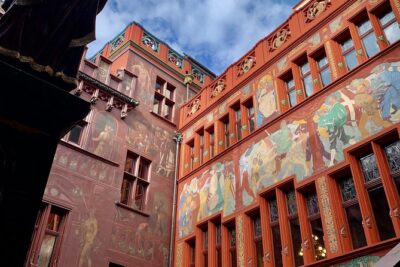

Highlights of Geneva: Dark History Quest Experience
Read our review →
Historical Zürich: A Self-Guided Audio Tour Through the city of 1,000 Fountains
Read our review →
Private Mystic Zermatt Tour: Peaks, History & Culture
Read our review →
Historic Lausanne: Exclusive Private Tour with a Local Expert
Read our review →Browse the lists this tour appears in