
Review · SELF-GUIDED TOURS
Self-Guided Audio Tour to the Dark Side of Zurich
Dark stories make old streets look different. This self-guided Zurich audio tour links witches, executions, medieval justice, and religious conflict across the old town, using a phone-based route that takes about one to two hours. I like its low price of $13.22 and the freedom to pause whenever you want.
I also like the clear directions and the way the walk leads you through places you might otherwise pass without noticing. The deep-voiced narration gives the subject suitable weight. The main drawback is the audio itself: some sections can feel like a long list of facts, and the subject matter is grim, especially for anyone sensitive to torture and human-rights abuses.
In This Review
- Key points about Zurich’s darker side
- A dark walk through Zurich’s old streets
- Starting at Paradeplatz with witches and executioners
- Börsenstrasse and the business of punishment
- The Limmat and the story of Elsbeth
- Fraumunster, Chagall, and a change of mood
- Hans Waldmann and the price of political power
- Wasserkirche and the legend of Felix and Regula
- Kirchgasse and the machinery of witch-hunts
- Untere Zäune and one woman’s fate
- Neumarkt’s former pillory
- Obere Zäune and a judge’s revenge
- Zurich Town Hall and medieval prosecution
- The Täufergedenkplatte and executions by drowning
- Rennweg and the last sip
- Herkulesbrunnen and the end of the city
- What the audio format does well
- Where the experience could be better
- Is $13.22 good value in Zurich?
- Who should book this walk?
- Should you book the Dark Side of Zurich tour?
- FAQ
- How long does the self-guided audio tour take?
- Where does the tour begin and end?
- Is a live guide included?
- What do I need to bring?
- Is entry to Fraumunster included?
- Is the tour available in languages other than English?
Key points about Zurich’s darker side
- Fourteen stops connect ordinary streets to grim history, from Paradeplatz to Herkulesbrunnen.
- The route is easy to follow, with photos and detailed directions sent through a link after booking.
- You explore privately, at your own speed, with no live guide or fixed group schedule.
- Fraumunster is the one possible paid sight, with interior admission listed at CHF 5 per person.
- The tour costs $13.22, making it a modest add-on for a first or second day in Zurich.
- The experience is available in English only, and you need your own phone, internet connection, and headset.
A dark walk through Zurich’s old streets
This is not a general introduction to Zurich. It is a themed walk that uses familiar landmarks as entry points into some of the city’s hardest stories.
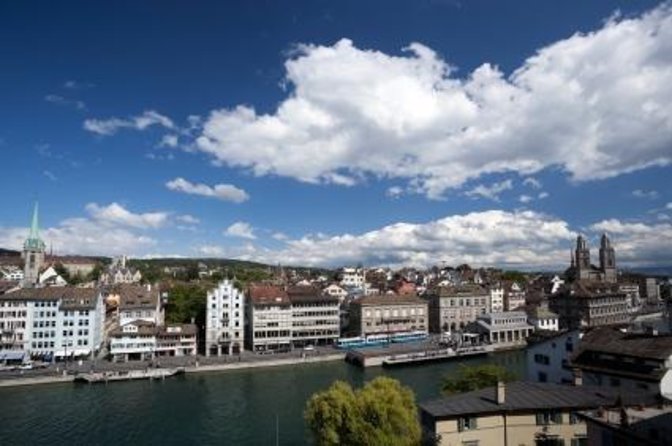
You begin at Paradeplatz and finish at Herkulesbrunnen on Bahnhofstrasse. The route moves through central Zurich, crossing streets and squares that now feel polished and modern but once carried very different duties. Executioners lived near the city center. Public punishment took place in open spaces. Religious dissent could lead to death.
The walking time between stops is part of the experience. Each spoken section lasts roughly five minutes, but the complete outing takes around one to two hours because you need time to walk, locate each stop, and look around.
I would not treat this as a fast podcast you listen to while rushing between sights. Give yourself time to stop. The stories work best when you look at the street, church, statue, or square being discussed.
More self-guided routes in Zürich:
- Zurich City Tour with Audio Commentary
★ 4.0 · 372 reviews - Einstein in Zurich: Walk in Time Exploration Game and Tour
★ 4.0 · 25 reviews - Self-Guided Audio City Tour in Zurich
★ 4.0 · 15 reviews
Starting at Paradeplatz with witches and executioners
Paradeplatz is an effective opening point because it presents modern Zurich at its most commercial. From there, the audio turns your attention toward the residence of a Zurich executioner and the unusual rules surrounding that profession.
You hear about how executioners trained and why their work occupied a strange place in society. They were necessary to the authorities, but their trade also set them apart. That tension gives the opening a useful human angle. This was not simply a job with a grim task attached. It shaped where people lived and how others viewed them.
The stop itself lasts about five minutes, and there is no admission charge. Since Paradeplatz is near public transportation, it is a practical place to begin.
Börsenstrasse and the business of punishment
At Börsenstrasse, the focus shifts from the executioner’s home to the mechanics of execution. The narration covers common execution methods, payment for the person carrying them out, and how often these public events took place.
I find this kind of detail useful because it moves beyond vague tales of cruelty. You get a sense of punishment as an organized civic process, with assigned roles, money, and procedures.
The information can also feel blunt. This is not softened historical storytelling. If your interest is in medieval law and public authority, this section should hold your attention. If you prefer lighter sightseeing, it may be the point where you decide the tour is more severe than expected.
The Limmat and the story of Elsbeth
Along the Limmat, the audio turns to people accused of witchcraft and the torture used to force confessions. One story centers on Elsbeth, who endured fifteen days of torment.
That detail is difficult, but it gives the subject a name and a human scale. Instead of hearing only about witch-hunts as a broad historical idea, you are asked to consider what prolonged imprisonment and torture meant for one person.
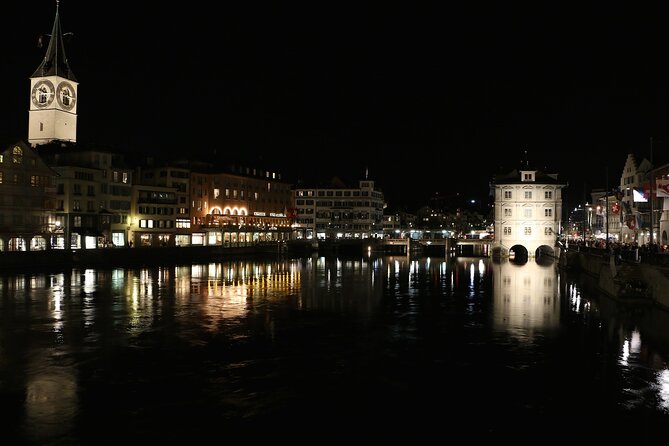
The riverside setting creates a sharp contrast. Zurich’s waterways are among the city’s most pleasant features, yet this stop asks you to picture them alongside fear, punishment, and state power. I would listen carefully here and avoid treating the story as spooky entertainment. The strongest parts of this walk are the ones that make you think about how justice was used against vulnerable people.
More audio tours:
- Historical Zürich: A Self-Guided Audio Tour Through the city of 1,000 Fountains
★ 5.0 · 11 reviews - The Best of Basel’s Hidden Treasures: A Self-Guided Audio Tour
★ 4.5 · 32 reviews - Revealing Lucerne: Self-Guided Audio City Tour
★ 4.0 · 20 reviews - Self-Guided Audio City Tour in Bern
★ 4.0 · 17 reviews
Fraumunster, Chagall, and a change of mood
Fraumunster gives the walk a visual pause. The church is known for its stained-glass windows by Marc Chagall, including imagery depicting the crucifixion of Jesus Christ.
The tour points out the church, but entering is optional and costs CHF 5 per person. One practical tip is worth following: allow extra time to go inside if the church is open and you want to see the windows. The interior adds color and beauty to a route otherwise dominated by punishment, religious conflict, and death.
This stop also helps broaden the subject. Zurich’s religious story is not only about executions. Its churches reflect belief, power, reform, and public identity. Fraumunster is one of the places where the walking tour can feel less like a grim checklist and more like a connection between the city’s buildings and its past.
Hans Waldmann and the price of political power
The Hans Waldmann Statue recalls a figure executed in 1489. The audio explains his remarkable rise and eventual downfall.
This stop brings politics into the walk. The route is not limited to witchcraft or ordinary criminal punishment. Waldmann’s story shows how a person with influence could still meet a violent end when political fortunes changed.
The statue itself is free to see and takes only a few minutes. I like this stop because it reminds you that historical executions were not aimed only at people accused of magic or common crimes. Public authority could also turn on prominent figures.
Wasserkirche and the legend of Felix and Regula
At Wasserkirche, you hear the legend of Felix and Regula, who were beheaded because they remained committed to their Christian beliefs.
The Water Church gives the tour another shift in tone. Here, execution becomes part of a religious story about martyrdom. That makes the stop useful for understanding how different communities remembered death. In one part of the walk, execution is punishment. Here, it is linked to faith and sainthood.
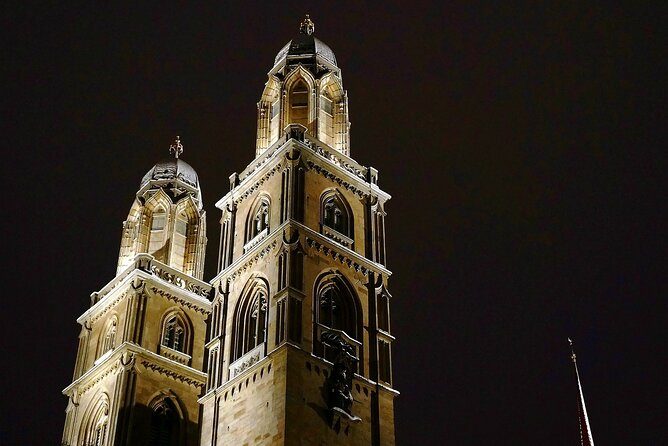
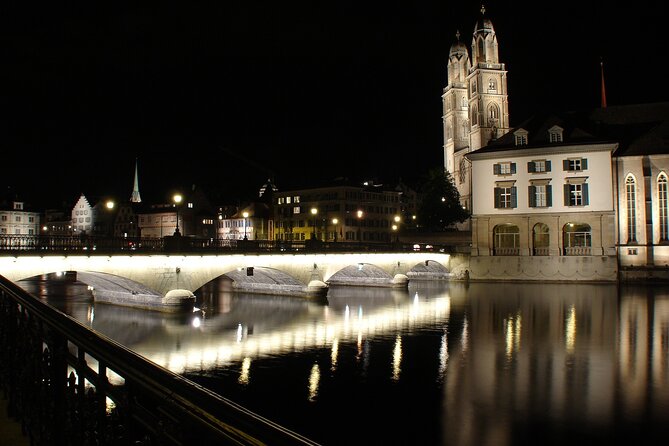
The route passes the Grossmunster as well, a major symbol of the Swiss-German Reformation and an important part of Zurich’s identity. The information provided does not list a separate stop time or admission for Grossmunster, so think of it as a landmark along the way rather than a scheduled interior visit.
Kirchgasse and the machinery of witch-hunts

Kirchgasse takes you into the practical side of witch-hunting. The narration discusses old guidance on identifying witches and the torture methods used against suspected offenders.
This section may be the most uncomfortable for modern listeners because it shows how suspicion could be turned into a system. Advice that sounded official or learned could help justify imprisonment and abuse.
The tour’s value here is its focus on place. You are not hearing about a distant country or an unnamed village. You are standing on a Zurich street while learning how authorities and communities once handled accusations.
Still, the audio can sometimes present several facts in quick succession. A listener who wants a carefully developed historical argument may find this part less satisfying than the personal stories.
Untere Zäune and one woman’s fate
At Untere Zäune, you pause near the former home of a wealthy woman executed for witchcraft. Her social position makes the story especially striking.
The stop helps correct a simple assumption that witchcraft accusations affected only poor or isolated people. The person connected with this house had wealth, yet that did not protect her from prosecution and execution.
Because the route uses a real residence and street, it also gives you a better sense of how close these events were to daily life. Homes, shops, churches, and public squares were all part of the same small urban world.
Neumarkt’s former pillory
Neumarkt marks the former location of the pillory. The audio explains the role of this public punishment site.
A pillory was not private correction. It exposed a condemned person to public shame. That makes Neumarkt one of the clearest examples of how punishment was designed to involve the whole community.
There is no admission fee, and the stop is brief. Its importance comes from the idea rather than from a surviving structure. You need to use your imagination, guided by the narration, to picture how the square functioned in an earlier Zurich.
Obere Zäune and a judge’s revenge
At Obere Zäune, the story turns toward a judge who worked during the height of the witch-hunts. The audio also explains his revenge story.
This is a useful reminder that prosecutions were shaped by people with personal motives, not only by neutral rules. Judges, officials, accusers, and witnesses all occupied a human system, with ambition and resentment mixed into legal decisions.
The stop adds character to the route, though it may also feel like one of the more specialized stories. If you want only the city’s biggest sights, you might find the detail too narrow. If you enjoy unusual local stories, it is exactly the sort of stop that makes this walk different from a standard city tour.
Zurich Town Hall and medieval prosecution
At Zurich’s Town Hall, the audio explains how medieval prosecution worked and identifies the square where death sentences were announced.
This is one of the route’s most important stops because it ties individual cases to official procedure. You learn not just who was punished, but how authorities processed accusations and made sentences public.
The Town Hall also gives you a place to pause and consider the difference between a historic justice system and modern legal standards. The narration does not turn the past into a harmless curiosity. It leaves you with questions about evidence, coercion, and the power of public institutions.
The Täufergedenkplatte and executions by drowning
The Täufergedenkplatte memorial plate recalls Anabaptists who were executed by drowning.
This is a compact stop, but the memorial gives the story a physical marker. The plate is a reminder that religious disagreement could bring a death sentence, even when the accused person’s beliefs posed no physical threat.
The location also continues the tour’s use of water as a recurring element. The Limmat carries stories of torture, martyrdom, and drowning, giving the walk a quiet but unsettling thread.
Rennweg and the last sip
At Rennweg, you hear about a baker whose role included giving condemned people their last sip before execution.
That small duty makes the final hours of condemned people feel more real. Execution was not only a courtroom decision or a public spectacle. It involved ordinary workers and repeated rituals, including food or drink before death.
I appreciate details like this because they show how punishment entered the daily routines of a city. The baker was not the judge or executioner, yet he was part of the process.
Herkulesbrunnen and the end of the city
The walk finishes at Herkulesbrunnen on Bahnhofstrasse, where condemned people left the city. The audio explains where burnings and hangings took place and brings the route’s main stories together.
Ending here makes geographic sense. You have moved from central streets and civic institutions toward the edge of the old city, following the path of people who were forced out to their deaths.
The final stop is not a cheerful finish, but it gives the walk a clear endpoint. You can then continue along Bahnhofstrasse, return to public transportation, or explore another part of central Zurich.
What the audio format does well
The strongest feature is flexibility. You do not need to join a group, wait for a guide, or keep up with strangers. You can pause at a church, replay a section, take photos, or stop for a drink.
The route is described with photos and detailed directions. That matters in an old city where several narrow streets can look alike. Clear instructions were praised as one of the tour’s best features, and I can see why this is important for a self-guided walk.
The professional narration is another plus. The deep voice suits the material and makes the experience feel more deliberate than a basic text-to-speech recording.
The private format also keeps the price down. At $13.22 per person, you are paying for a focused audio experience rather than a live guide. For a small group, that can be good value, especially if you already plan to walk through the old town.
Where the experience could be better
The audio has some filler and stretches where facts arrive as a list. That can make the route feel less polished than a strong live talk, where a guide can explain a point in response to your questions.
The subject is also consistently dark. Torture, witch-hunts, executions, drowning, burnings, and hangings are not side notes here. They are the central theme. I would not choose this as a relaxed family walk without first considering how everyone in your group handles difficult history.
Technical preparation matters. You receive a link after booking and need your own phone, internet access, and headset. One person had trouble getting the link to work and experienced slow loading. A reliable connection may help, and it is wise to open the link before you reach Paradeplatz rather than waiting until the tour begins.
The route is in English only. The tour is private, and most people can participate, with service animals allowed and public transportation nearby.
Is $13.22 good value in Zurich?
Yes, if you want a specific theme and plan to explore on foot. Zurich is expensive, so a low-cost activity that fills one to two hours has clear appeal.
The value is strongest for visitors who enjoy local stories more than polished sightseeing. You see major landmarks such as Fraumunster, Wasserkirche, Grossmunster, Town Hall, and Bahnhofstrasse, but the audio keeps asking you to look at them through the history of punishment and religious conflict.
It is less useful as your only introduction to Zurich. The route does not aim to explain the city’s full culture, art, food, or modern life. One useful suggestion raised in the feedback was the desire for a broader sightseeing walk with a specific angle. Until then, you should pair this experience with a general old-town tour or your own independent visit to Zurich’s major sights.
The current rating is 4.7 from 14 ratings, with 93 percent of participants recommending it. That is encouraging, but the small number of ratings means I would still pay attention to the format and subject before booking.
Who should book this walk?
I would recommend it to you if you enjoy:
- Dark urban history and unusual local stories
- Independent sightseeing with no fixed group
- Walking routes that connect famous sights to lesser-known events
- Short activities that fit around a museum visit or meal
- Religious and legal history, especially witch-hunts and medieval punishment
I would think twice if you want a cheerful city overview, a live guide, or a highly polished narrative with little repetition. I would also skip it if torture and executions are likely to spoil your day.
Book it when you have a free block of at least two hours. Start with a charged phone, headphones, and the audio link ready. If you want to enter Fraumunster, carry the extra CHF 5 and allow time for the stained glass.
Should you book the Dark Side of Zurich tour?
Book it if you want to see Zurich from an unusual angle and you are comfortable with hard subject matter. The price is modest, the route is private, and the directions make it easy to fit into a day of sightseeing.
Skip it if you want a broad first-time introduction or prefer a human guide who can answer questions and adjust the pace. For the right listener, this is a thoughtful walk through the city’s uncomfortable past. Just bring a working phone, a headset, and a willingness to listen carefully rather than treat the stories as simple ghost tales.
FAQ
How long does the self-guided audio tour take?
The tour takes approximately one to two hours, depending on your walking pace and how long you spend at each stop.
Where does the tour begin and end?
It begins at Paradeplatz in Zurich and ends at Herkulesbrunnen on Bahnhofstrasse.
Is a live guide included?
No. This is a private self-guided activity using an audio link provided after booking.
What do I need to bring?
You need your own mobile phone with internet access and a headset.
Is entry to Fraumunster included?
No. The outdoor stop is included, but entering Fraumunster is optional and costs CHF 5 per person.
Is the tour available in languages other than English?
The tour is offered in English only.
Just added around Zürich
- Lake Zurich boat tour for an afternoon !★ 5.0 · 3 reviews
- 2 Hour Floating Harmony Couples Course★ 5.0 · 3 reviews
- Lake Zurich mini boat tour / by night!★ 5.0 · 3 reviews
- Central Switzerland (Private Tour)★ 5.0 · 3 reviews
- Wakeboarding Lake Zurich – afternoon !★ 5.0 · 3 reviews
- Private transfer from Zurich City to Basel Airport★ 5.0 · 3 reviews
- Jungfrau, Top of Europe & Interlaken Small group from Zurich★ 4.5 · 3 reviews
- Private Arrival Transfer: from Zurich Airport to Bern City★ 5.0 · 3 reviews
Self-Guided Tours, compared.
Mt. Rigi Self-Guided Tour: Lake Lucerne Cruise and Mountain Spa
Read our review →
Self-Guided Chamonix with Aiguille du Midi or Mer de Glace
Read our review →
Chamonix Self-guided Sightseeing Tour from Geneva
Read our review →
The Best of Basel’s Hidden Treasures: A Self-Guided Audio Tour
Read our review →
Einstein in Zurich: Walk in Time Exploration Game and Tour
Read our review →
Browse the lists this tour appears in