
Review · MUSEUMS
Lucerne Swiss Museum of Transport Entrance Ticket
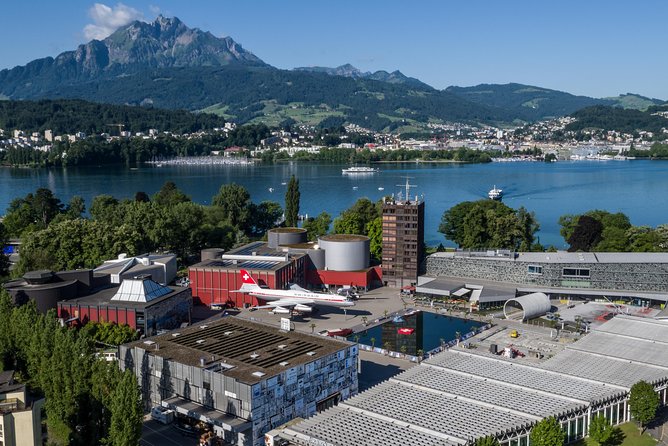
A museum where machines come alive. Lucerne’s Swiss Museum of Transport turns railways, aircraft, cars, ships, and space travel into a hands-on day out, not a quiet march past glass cases. I like the freedom to explore without a tour schedule, and I like having a reliable indoor plan when rain rolls across central Switzerland. The main catch is price: at $46.23 per person, the basic ticket does not include the planetarium, Filmtheatre, or Swiss Chocolate Adventure.
The museum can fill two or three hours, but you have the option to stay much longer. Families with children and teenagers will find the most to do, while adults who love classic vehicles, engineering, aviation, or Swiss railways can easily lose track of time.
In This Review
- Key points to know before you go
- Why Lucerne’s transport museum is more than a vehicle collection
- The Aviation Hall puts you in the pilot’s seat
- Rail Transport Hall is the museum’s Swiss heart
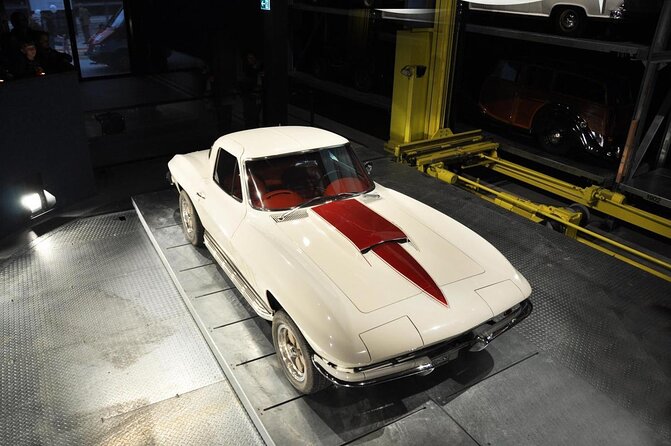
- The Road Transport Hall is a hit with car fans
- Navigation, i-factory, and Swissarena widen the story
- Why children and teenagers usually get the most from it
- The optional planetarium can improve the day
- How long to stay and how to plan the visit
- Is $46.23 a fair price?
- What to expect on a crowded or warm day
- Who should book the Swiss Museum of Transport?
- Should you book it?
- FAQ
- Where is the Swiss Museum of Transport?
- What are the museum’s opening hours?
- How long should I plan to spend there?
- What does the entrance ticket include?
- Are the planetarium and Filmtheatre included?
- Is food included in the ticket?
- Are service animals allowed?
- What is the cancellation policy?
Key points to know before you go
- More than 3,000 exhibits: Rail, road, air, water, space, information technology, and Swiss geography all get their own hands-on treatment.
- Excellent rainy-day choice: The main attractions are indoors, with simulators, multimedia displays, and interactive challenges.
- Teenagers have plenty to do: Cars, train controls, aircraft simulators, and science displays keep older children involved.
- Allow at least two to three hours: You can see the main halls in that time, but a full visit may take most of the opening day.
- Extra attractions cost more: The planetarium, Filmtheatre, and Swiss Chocolate Adventure are separate from the entrance ticket.
- Opening hours are 10 a.m. to 5 p.m.: The ticket is flexible, but the museum is not open late.
Why Lucerne’s transport museum is more than a vehicle collection
The Swiss Museum of Transport is built around a simple idea: transportation is easier to understand when you can interact with it. Instead of only reading about locomotives or aircraft, you can operate controls, test systems, and take part in small challenges.
That approach gives the museum a broad appeal. A five-year-old may be happy with games and play areas, while a parent studies a historic locomotive or a classic car. Teenagers can head toward the flight and road simulators, which gives them something active to do instead of asking them to admire machinery from a distance.
I especially like the way the museum connects old and new. Steam locomotives sit alongside modern transport ideas, and historic cars share space with displays about technology and future travel. The result is not just a collection of objects. It is a walk through how people have moved, worked, communicated, and explored.
The setting also helps on a wet Lucerne day. You do not need to commit to a fixed tour or follow a guide through the building. Go at your own pace, skip a section that does not interest you, and return to a favorite simulator if the lines and opening arrangements allow it.
More museums:
- Swiss Chocolate Adventure at Swiss Museum of Transport in Lucerne
★ 3.5 · 60 reviews - The Olympic Museum Entrance Ticket in Lausanne
★ 4.5 · 211 reviews - Zurich Highlights City Tour with Optional FIFA Museum Ticket
★ 3.5 · 101 reviews
The Aviation Hall puts you in the pilot’s seat
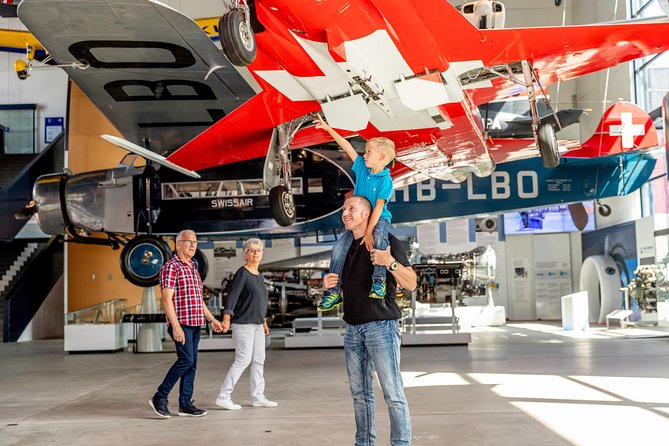
The Aviation Hall is one of the strongest sections for families and anyone who likes a little action. You will see historic aircraft and other flying machines, then find simulators that let you try operating an airplane, helicopter, or hang glider.
These simulators are valuable because they turn aviation from a visual subject into a physical one. You get a sense of the controls and the difficulty of keeping a machine in the air, even though the experience is designed for fun rather than professional training.
The hall also gives the museum a good rhythm. You can move from examining real aircraft to trying a simulator, then return to the displays with a better idea of what the machine is designed to do.
If your group has different interests, this area helps. One person can focus on the aircraft while another looks for the next interactive activity. I would make this a priority with children and teenagers, especially if they are less patient with long written explanations.
Rail Transport Hall is the museum’s Swiss heart
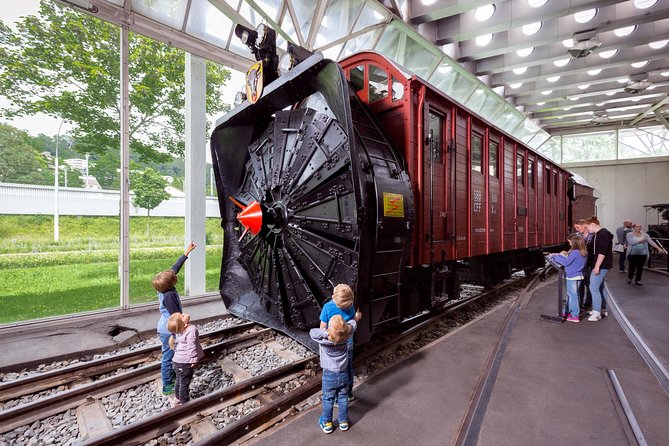
Switzerland and rail travel belong together, so the Rail Transport Hall feels especially fitting in Lucerne. Here you can see steam locomotives, model railways, and displays about the systems that make trains work.
The train simulators are the main draw for hands-on fun. You can try managing tunnels, signals, and bridges, which makes clear that railway travel depends on far more than the locomotive at the front. It is a small lesson in timing, safety, and coordination.
The model railways add a different kind of appeal. They reward slower looking, particularly if you enjoy spotting details and watching a miniature network function. Children often respond to the movement and scale, while adults may find themselves comparing the models with rail journeys they have taken.
A useful way to approach this hall is to begin with the real locomotives, then move to the models and simulators. That order gives you a clearer sense of how the technology evolved. The displays can feel a little confusing at times because the museum covers so much ground, so do not worry about seeing every label in sequence.
The Road Transport Hall is a hit with car fans
The Road Transport Hall focuses on the history of automobiles and includes 20 iconic cars. This is likely to be one of the busiest sections for families, since the subject is immediately familiar and the vehicles are easy to appreciate without technical knowledge.
The interactive crash exhibit lets you experience a collision as a crash-test dummy, without the bruises. It is a clever way to show the forces involved in a crash and the role of safety design. The attraction is playful, but it also gives the subject some weight.
Car enthusiasts may want to spend more time examining the historic vehicles, while younger children may move quickly toward the interactive displays. That difference is normal. The museum works best when each person chooses a few favorite sections rather than trying to give equal attention to every hall.
I would plan the road section around the rest of your group. If everyone likes cars, it could take a substantial part of your visit. If not, use it as a lively stop between the rail and aviation halls.
A few more trips and experiences worth a look
- Mount Pilatus Summit from Lucerne With Lake Cruise
★ 4.5 · 1,260 reviews - Jungfraujoch Top of Europe Day Trip from Lucerne
★ 4.5 · 840 reviews - Lucerne Walking & Boat Tour: The Best Swiss Experience
★ 4.5 · 417 reviews - Lake Lucerne Panoramic Sightseeing Cruise
★ 4.5 · 363 reviews
Navigation, i-factory, and Swissarena widen the story
The museum does not stop with cars, planes, and trains. The Navigation Hall looks at seagoing travel, giving the transport story a waterborne chapter. It is a useful reminder that movement across lakes and oceans requires very different solutions from movement on rails or roads.
The i-factory covers information technology. This section broadens the museum’s idea of transport beyond physical machines. Modern travel depends on communication, information, and digital systems, so the subject fits naturally even if it feels different from the locomotive halls.
Swissarena is one of the more unusual displays. An aerial photograph of Switzerland fills an entire room, and you can walk across it. That full-room scale gives you a visual sense of the country that a standard map cannot match.
I would not rush these sections simply because they are less familiar. They provide useful variety after the large vehicles and noisy simulators. Swissarena, in particular, can give you a pause from the machinery while still keeping the focus on how people understand and move through a country.
Why children and teenagers usually get the most from it
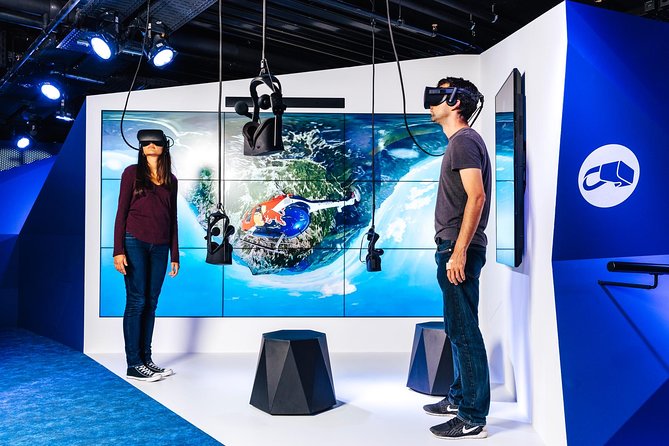
The museum is designed to involve different ages, and that is one of its clearest strengths. Young children have games, interactive displays, and a large themed play area outside. Older children can choose between vehicles, simulators, and science-based activities.
Teenagers are not limited to a children’s corner. The aircraft and car areas offer enough novelty to hold their attention, and the train simulators give them a task rather than another object to photograph. One family visit described a five-year-old enjoying the many activities, while another singled out the train simulator as a favorite for a child whose parent works for Swiss Federal Railways.
Adults also have reasons to visit. The museum presents the evolution of transportation from a historical angle, and the collection includes enough real machinery to reward anyone interested in design, engineering, or Swiss mobility.
Still, expectations matter. If you want a quiet, highly specialized museum with long scholarly explanations, this may feel too playful. A small number of people have found the exhibits less creative than expected or felt that the price was high for what they saw. I think the ticket makes more sense when you plan to use the interactive areas, not when you only want to glance at the vehicles.
The optional planetarium can improve the day
The domed planetarium is not included in the standard entrance ticket, but it may add real value if you enjoy astronomy or want another substantial indoor activity. Shows present the night sky and space subjects in a large-format setting, and one program about astronomy was described as both interesting and educational.
Because the planetarium costs extra, you should decide before buying additional tickets. If your family is happy with the main museum, there is no need to add it. If you are planning a long visit and want a change from vehicles, it can help fill the day.
The Filmtheatre is another separate attraction, with 3D and high-definition movies. The Swiss Chocolate Adventure also costs extra. These add-ons can make the museum feel like a full entertainment complex, but the charges accumulate quickly.
That is the main value question. The entrance ticket gives you the permanent and temporary exhibitions, but not every attraction under the museum’s roof. If you want the planetarium, film, and chocolate experience as well, check the combined ticket choices before committing to separate purchases.
How long to stay and how to plan the visit
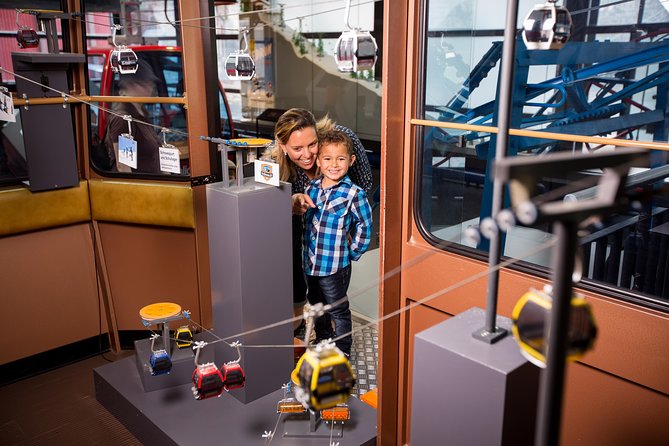
The listed duration is approximately eight hours, while the stated opening hours are 10 a.m. to 5 p.m. In practical terms, think of this as a flexible full-day admission rather than a guided eight-hour program.
Two or three hours is enough for a useful first visit. You can see the main transport halls, try several interactive displays, and get a good feel for the museum. I would allow longer if you are visiting with children, want the planetarium or Filmtheatre, or have a strong interest in railways and cars.
A simple plan works well:
- Begin with the halls that matter most to your group, such as aviation, rail, or road transport.
- Use Navigation Hall, i-factory, and Swissarena as variety between the larger vehicle displays.
- Leave time for the play area and food stops if you are with young children.
- Add the planetarium or Filmtheatre only after deciding how much time remains.
- Keep the final part of the day flexible, since interactive exhibits can take longer than expected.
The museum is open Monday through Sunday from 10 a.m. to 5 p.m. Confirmation is provided at booking, and the experience is near public transportation. Food and drinks are not included, and transportation to the museum is also your responsibility.
Prebooking is useful because it guarantees entry and helps protect your limited time in Lucerne. One practical point is worth noting: a booking may still require you to pass through the ticket desk to collect or redeem admission, so it does not always mean walking straight past every line.
Is $46.23 a fair price?
At $46.23 per person, this is not a bargain museum ticket. The price is easier to justify if you plan to spend several hours inside and make use of the simulators, interactive exhibits, and temporary exhibitions.
For a family, the total cost rises quickly. The basic admission does not cover food, drinks, the planetarium, Filmtheatre, or Swiss Chocolate Adventure, so write down the full amount before adding extras. The museum can be excellent value for a rainy day because it combines several types of activity in one place, but it may feel expensive if you only want to see the vehicle collection for an hour.
The strongest value comes from flexibility. You are not paying for a fixed route or a short guided visit. You can stay with the exhibits that suit your group, take breaks, and make the museum the main event of the day.
Free cancellation is available if you cancel at least 24 hours before the start time. Changes or cancellations made later do not qualify for a refund, so keep that deadline in mind when weather or family plans are uncertain.
What to expect on a crowded or warm day
The museum’s popularity is also its main practical weakness. A very busy day can make it harder to use the interactive exhibits, and one visitor was unable to make proper use of the ticket because the museum felt too crowded.
Temperature may also affect your visit. One especially negative account described the interior as uncomfortably warm, with poor air conditioning on the second floor. This does not define every visit, but it is a fair reason to avoid assuming that an indoor museum will always feel cool and restful.
If the weather is mild and the building is comfortable, the indoor setting is a major advantage. If it is crowded or warm, focus on your priority halls rather than trying to see everything. The flexible ticket helps, but it cannot remove queues or congestion inside popular areas.
Who should book the Swiss Museum of Transport?
I would recommend it most strongly to families, railway fans, car enthusiasts, aviation enthusiasts, and anyone looking for a weather-proof activity in Lucerne. It is especially useful when children need movement and choices instead of a quiet museum visit.
It also suits mixed-age groups. A young child can play, a teenager can use the simulators, and an adult can study the locomotives or classic cars. Service animals are allowed, and most people can participate.
I would be more cautious if your main goal is a traditional art or history museum, or if you dislike interactive attractions. The museum’s scale can feel confusing, and some sections may seem too basic for adults seeking a highly detailed specialist collection.
Should you book it?
Book the basic ticket if you want a flexible, mostly indoor day with real vehicles, hands-on activities, and enough variety for different ages. It is a strong choice for families and a sensible backup when Lucerne’s weather turns wet.
Before buying, decide how long you will stay and whether you want the planetarium, Filmtheatre, or Swiss Chocolate Adventure. The entrance ticket is most worthwhile when you plan to spend at least two or three hours inside. If you only want a quick look at a few cars or trains, $46.23 may feel steep.
FAQ
Where is the Swiss Museum of Transport?
The museum is in Lucerne, Switzerland. It is near public transportation, but transportation to and from the museum is not included in the ticket.
What are the museum’s opening hours?
The museum is open Monday through Sunday from 10 a.m. to 5 p.m.
How long should I plan to spend there?
Two to three hours is enough for many people to see the main museum areas. You can stay longer during the opening hours, especially if you use the interactive exhibits or add other attractions.
What does the entrance ticket include?
The ticket includes access to the permanent and temporary exhibitions at the Swiss Museum of Transport.
Are the planetarium and Filmtheatre included?
No. The planetarium and Filmtheatre require separate payment. Swiss Chocolate Adventure is also not included.
Is food included in the ticket?
No. Food and drinks are not included unless specifically stated.
Are service animals allowed?
Yes. Service animals are allowed.
What is the cancellation policy?
You can cancel up to 24 hours before the experience start time for a full refund. Cancellations or changes made less than 24 hours before the start time are not accepted for a refund.
Just added around Lucerne
- Best of the Uri Alps: A fjord-like lake, glorious peaks and sustainable tourism★ 5.0 · 3 reviews
- Cheese, Chocolate and Wine in the Bern Region from Luzern★ 5.0 · 3 reviews
- Private city tour in lucerne★ 5.0 · 4 reviews
- Glacier Express Panoramic Train Round Trip in one Day Private Tour from Luzern★ 4.0 · 5 reviews
- Touristic highlights of Lucerne on a Private half day tour with a local★ 4.0 · 5 reviews
- Alpine Majesty:Exclusive Private Tour to Mount Titlis from Luzern★ 4.0 · 5 reviews
- Mt. Pilatus Gondola and Aerial Cableway Ticket from Kriens★ 5.0 · 6 reviews
- Lucerne Walking Tour and Beer Tasting★ 5.0 · 6 reviews
Museums, compared.
Zurich Highlights City Tour with Optional FIFA Museum Ticket
Read our review →
Tour in Lindt Home of Chocolate Museum From Zurich With pickup
Read our review →
Swiss Chocolate Adventure at Swiss Museum of Transport in Lucerne
Read our review →
Zurich Highlights with Lake Cruise & Optional FIFA Museum Ticket
Read our review →
Art, Castle & Aliens: Gruyères Full-Day Tour to HR Giger Museum
Read our review →
Lindt Home of Chocolate Museum Entry Ticket With Pickup Only
Read our review →Browse the lists this tour appears in