
Review · WALKING TOURS
Zermatt 2-Hour Small Group Village Walk
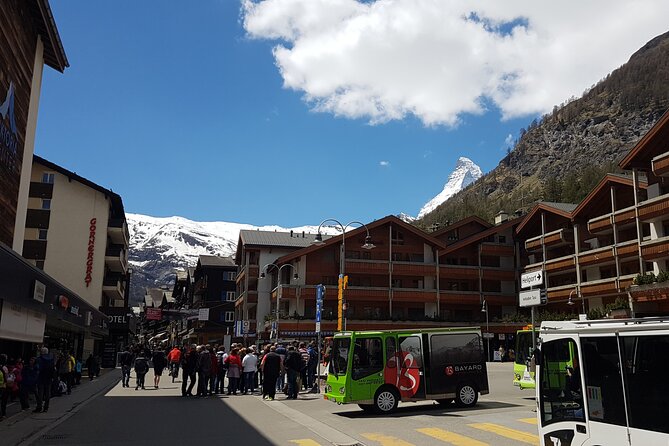
The best Zermatt stories hide off the main street. This two-hour village walk pairs the famous Matterhorn photo stop with old barns, narrow lanes, mountaineering history, and quieter corners most people miss. I especially like the local focus and the small group limit of 15. The main consideration is price: at $140.55 per person, it is costly for a short walk, though the value improves when the guide adds personal stories and practical help.
I also like that the route is easy to fit into a first full day. Guides such as Remi, Tony, Mike, Anton Imoberdorf, Abraham, and Toni have helped visitors understand Zermatt’s culture, food, buildings, and climbing past. Weather matters, and cloudy conditions can hide the Matterhorn, so keep your schedule flexible.
In This Review
- Key points at a glance
- Why this short Zermatt walk is worth considering
- Bahnhofplatz: starting where Zermatt begins
- Bahnhofstrasse: seeing the resort side of town
- Gourmetweg: modern Zermatt and a winter changeover
- Hinterdorfstrasse: the old village in close quarters
- Monte Rosa Hotel: where alpine tourism took hold
- Mountaineers’ Cemetery: the sobering part of the walk
- Kirchbrücke bridge: the classic Matterhorn view
- Uferweg and the Vispa river: finishing through everyday Zermatt
- What $140.55 buys you
- Timing, pace, and practical fit
- Who will get the most from this experience?
- Should you book the Zermatt village walk?
- FAQ
- Where does the Zermatt village walk start?
- Where does the tour end?
- How long does the experience last?
- What language is the tour offered in?
- How much does the tour cost?
- What is the maximum group size?
- Is the Matterhorn included in the route?
- Can I cancel the tour?
Key points at a glance
- Starts at Zermatt’s only public arrival point: Meet at the Tourist Information Center beside Bahnhofplatz, the village train station.
- Leaves the shopping street behind: The route turns away from Bahnhofstrasse toward quieter corners and local details.
- Old Zermatt comes alive: Hinterdorfstrasse brings you to centuries-old buildings, barns, stone roofs, and tight alleyways.
- Matterhorn climbing has a human cost: The Mountaineers’ Cemetery and Monte Rosa Hotel connect the village to early alpine tourism.
- A classic photo stop is included: Kirchbrücke bridge offers the familiar Zermatt view with the Matterhorn behind the village.
- Small groups make questions easier: The maximum is 15 people, and some departures have operated almost like private walks.
Why this short Zermatt walk is worth considering
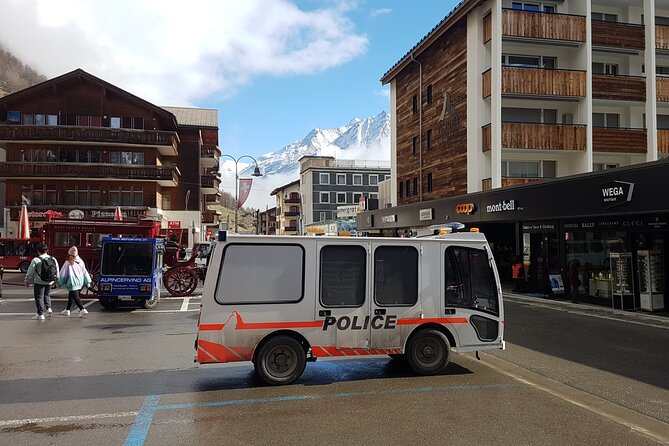
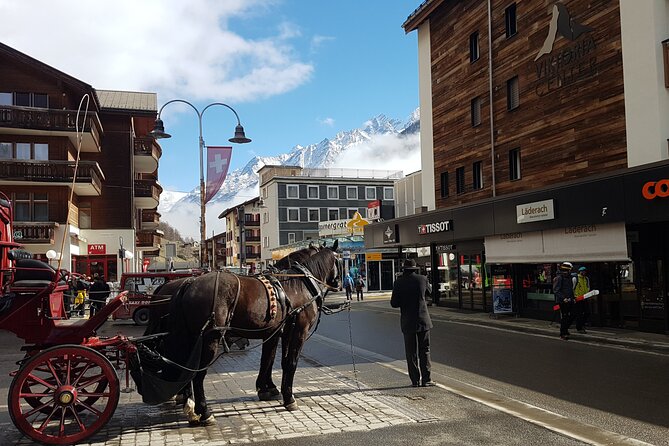
Zermatt can seem simple at first glance: a polished mountain resort, a famous peak, electric vehicles, hotels, shops, and cable cars. Walk ten minutes away from the main shopping strip, though, and the village begins to show older layers. This tour is designed to make those layers visible.
I like the way the walk moves between ordinary village life and major alpine events. You see a tennis court that becomes a natural ice rink in winter, modern apartment buildings, old farm structures, a historic hotel, a cemetery for climbers, and the river path. Those changes help you understand that Zermatt is not just a base for mountain rides. It is also a place shaped by farming, tourism, engineering, risk, and local traditions.
The guides are a major part of the experience. Abraham is praised for answering questions and stopping often for photographs. Remi, a local guide, has shared photos and stories about food, architecture, mountain sports, and village life. Tony and Anton Imoberdorf have used a map to explain Switzerland before setting off, which is useful if Zermatt is your first stop in the country.
The walk is also adaptable. One guide joined a couple at the Matterhorn Museum after the tour, while another helped with tickets for an observation trip and guided the pair onward with an apprentice. Those extras are not guaranteed, but they show why a local guide can be worth paying for.
Still, two hours passes quickly. You will get an introduction, not an exhaustive study of Zermatt. At $140.55, the cost makes the most sense if you value conversation, local stories, and help finding your bearings. If you only want a stroll and a Matterhorn photograph, you can walk much of the village without paying an admission fee.
More walking tours:
- Zermatt Village Walk and Mt. Gornergrat Private Day Trip
★ 4.5 · 12 reviews - Zermatt Village Walk and Glacier Paradise Private Day Trip
★ 5.0 · 4 reviews - Zurich Walking Tour With Cruise and Aerial Cable Car
★ 5.0 · 669 reviews
Bahnhofplatz: starting where Zermatt begins
The tour meets at the Zermatt Tourist Information Center at Bahnhofplatz 5. This is a practical starting point because the train station is the main entrance to the village. Zermatt is reached by train, and goods also arrive this way, giving the station an importance beyond simple transportation.
Your guide begins here and places the village in context. Tony has used a map at the start to explain Switzerland and basic local geography. That opening can help you understand the relationship between Zermatt, the surrounding alpine peaks, and the Matterhorn before the streets and cable cars start competing for your attention.
Allow yourself enough time to reach the meeting point. The activity ends back at the same place, so you can continue to a restaurant, museum, cable car, or train after the walk without needing a taxi or a complicated transfer.
Bahnhofstrasse: seeing the resort side of town
The first section follows Bahnhofstrasse, Zermatt’s best-known shopping street. This is where you see the commercial face of the resort, with shops, hotels, and the steady flow of people moving through the center.
The route does not stay there for long. After roughly ten minutes, it turns left and leaves the main crowds behind. That choice is one of the walk’s strengths. Instead of spending the full two hours pointing out storefronts, the guide uses the shopping street as a contrast with older and quieter parts of town.
You will still want to look around here. Bahnhofstrasse explains how much Zermatt has changed as a holiday center. Then, once you turn away, the guide can show you what the busy center hides.
Gourmetweg: modern Zermatt and a winter changeover
At Gourmetweg, the route passes a tennis court that becomes a natural ice rink during winter. It is a small detail, but a useful one. It connects the village’s summer and winter economies without requiring a visit to a ski area.
This section also gives you a look at newer Zermatt buildings and modern architecture. The contrast with the old village is immediate. You are not being shown a preserved museum town. Zermatt mixes contemporary construction with traditional structures, and the guide can explain how the resort has grown.
The stop lasts about ten minutes, so do not expect a long architectural lecture. Its value comes from the comparison. The tour keeps asking you to look at how the village works now, then compare it with how it worked centuries ago.
A few more trips and experiences worth a look
- Geneva Highlights 2-Hour Introductory Tour
★ 4.0 · 322 reviews - Best Intro to Bern in 2 hours with a Local
★ 4.5 · 20 reviews - Best Intro to Zurich in 2 hours with a Local
★ 3.5 · 5 reviews - 2 Hour Floating Harmony Couples Course
★ 5.0 · 3 reviews
Hinterdorfstrasse: the old village in close quarters
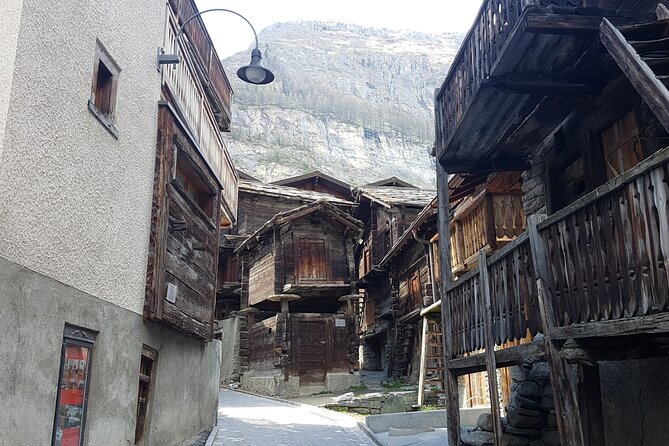
Hinterdorfstrasse is the most rewarding stop for many people who want more than resort scenery. Here, the path enters the older part of Zermatt, with narrow lanes, old barns, and buildings made in ways that reflect earlier alpine life.
The guide explains the purpose of the flat-stone rooftops, a detail easy to miss when you are focused on the Matterhorn. You also see barns more than 200 years old. These structures give the village a physical link to its farming past, before tourism became the main reason people arrived.
The alleyways are tight and the buildings are close together. That makes this section feel very different from Bahnhofstrasse and the larger hotels. You get a better sense of how people once stored food, shelter, and animals in a mountain settlement where space and weather mattered.
Plan on about 20 minutes here. The timing is enough to see the main features, but the guide’s storytelling will determine how much you take away. If you enjoy architecture and local customs, this is where the walk earns much of its price.
Monte Rosa Hotel: where alpine tourism took hold
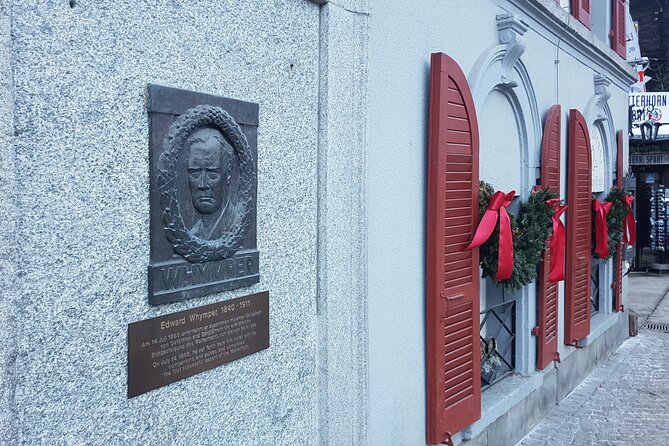
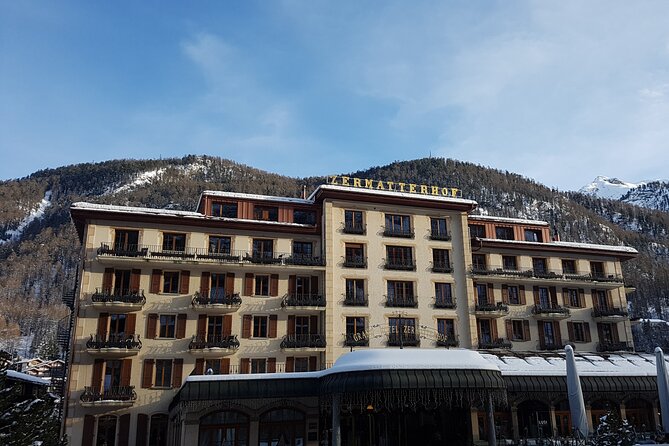
The Monte Rosa Hotel marks the point where Zermatt’s tourist growth began. The stop connects the village’s hotel business with the arrival of mountaineers and the wider fascination with climbing the Matterhorn.
You also learn about the first ascent of the peak. That story is not treated as an abstract sporting achievement. It helps explain why Zermatt became a major alpine destination and why hotels, guides, transport, and mountain services grew around climbing.
The stop is brief, about ten minutes, but it links several parts of the tour. The old village shows what came before large-scale tourism. The Monte Rosa Hotel shows how the mountain changed Zermatt. The cemetery, just ahead, shows the dangers that came with that change.
Mountaineers’ Cemetery: the sobering part of the walk
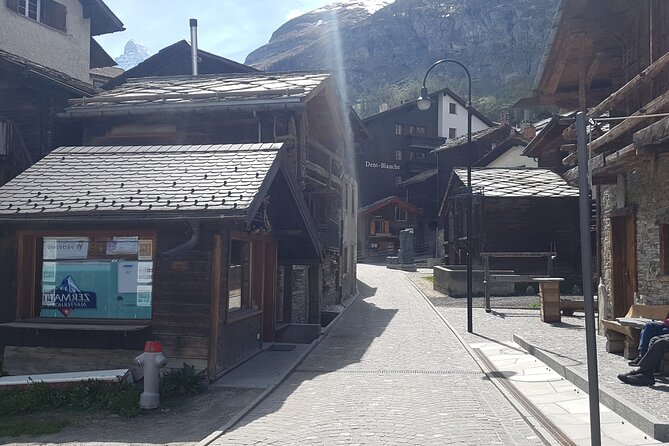
The Mountaineers’ Cemetery is one of the most serious stops. It honors climbers who died on the Matterhorn or nearby alpine peaks. The tour does not present mountaineering only as glamorous adventure. It also acknowledges the human cost.
Several guides place strong attention on climbing history, and the cemetery adds emotional weight to the stories you hear at the Monte Rosa Hotel. After seeing the buildings and business that developed around mountaineering, you are reminded that the mountains remain hazardous.
You may find this section more reflective than scenic. That is part of its value. It gives the Matterhorn a human dimension, especially if you have plans to ride higher into the mountains or think of the peak mainly as a picture in the distance.
Kirchbrücke bridge: the classic Matterhorn view
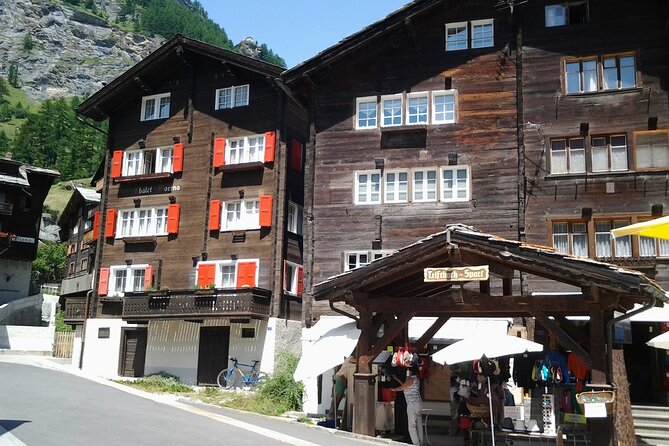
The viewpoint at Kirchbrücke bridge is the tour’s main picture stop. From here, you can take the familiar Zermatt photograph with the Matterhorn behind the village.
The guide allows about 15 minutes, which should give you time to frame pictures and ask questions. Abraham is specifically praised for stopping often for photographs, and that pace suits a viewpoint like this. You are not pushed past the scene after one quick glance.
The view depends on the weather. One person saw only part of the Matterhorn through clouds, so do not treat a clear peak as guaranteed. The walk can still be worthwhile in poor visibility, but you should set realistic expectations. If the mountain is hidden, the old village, cemetery, and local stories carry more of the experience.
Uferweg and the Vispa river: finishing through everyday Zermatt
The final 30 minutes follow Uferweg along the Vispa river. You pass hotels and newer apartments, then continue by the Sunnegga cable car station and along Getwing Street toward the train station.
This is a useful ending because it returns you to present-day Zermatt. The route has moved from the train station, through shopping streets, old buildings, hotels, and memorials, then back alongside the river and modern accommodation. You finish with a sense of how the whole village fits together.
The river walk is not described as a dramatic nature outing. It is an urban village section, showing the places people use when they are not posing for a Matterhorn photograph. That makes it a good closing stretch, though people hoping for mountain trails may find it less exciting.
The tour ends where it began at Bahnhofplatz. That simple layout works well if you have a train later or want to continue independently.
What $140.55 buys you
The listed price is $140.55 per person. Every stop is free to enter, so you are paying for the guide, the route, the interpretation, and the convenience of having someone connect the pieces.
That is a high price for two hours if you judge the tour as a basic walk. It becomes easier to justify when the group is small and the guide is strong. With a maximum of 15 people, questions should be manageable. Some departures have been limited to just two people, turning the outing into a nearly private conversation without a private-tour price.
The best value comes from the local knowledge. Remi is described as a native of the area who added local stories and introduced people to places they would not have found alone. Tony’s map explanation and willingness to answer many questions also add value for first-time visitors.
You should not assume every guide will offer the same extra help with museums, tickets, or lunch suggestions. Those useful touches have happened, but they are not listed as guaranteed inclusions. Still, the repeated praise for friendly, clear, engaging guides suggests that personal guidance is the core product.
Timing, pace, and practical fit
The walk lasts about two hours and is offered in English. It is described as easy walking, and Zermatt has no ordinary car traffic in the village, which makes the route comfortable for most people.
You should still wear sensible shoes. The route includes streets, narrow lanes, a riverside path, and a bridge viewpoint. No special hiking ability is stated, but this is not a seated sightseeing trip.
Children must be accompanied by an adult. Service animals are allowed, and the activity is near public transportation. Most people can participate, but the supplied information does not promise step-free access at every point, so anyone with specific mobility needs should confirm details before booking.
The experience requires good weather. If conditions cause cancellation, you are offered another date or a full refund. You can also cancel for a full refund up to 24 hours before the start time. A minimum group size is required, and if that number is not reached, you are offered another option or a refund.
Who will get the most from this experience?
I would choose this walk for a first visit to Zermatt, especially if you arrive the day before and want your first full morning to have a clear purpose. It gives you the basic village story before you spend money on cable cars or mountain viewpoints.
It also suits people who enjoy architecture, local history, and human stories more than a simple photo stop. The old barns, flat-stone roofs, and cemetery add substance to a place that can otherwise feel like a collection of hotels and shops.
Families can benefit from the short duration, provided children stay with an adult and are comfortable walking through the village. The English-language format also helps if you want context without arranging a longer private guide.
I would hesitate if you have only a few hours in Zermatt and want maximum time at a high mountain viewpoint. I would also hesitate if $140.55 feels steep for a walk where admission is free. In that case, you could explore Bahnhofstrasse, Hinterdorfstrasse, the cemetery, and Kirchbrücke on your own, though you would miss the explanations and local connections.
Should you book the Zermatt village walk?
Book it if you want Zermatt to make sense, not just look pretty. The combination of old village lanes, Matterhorn climbing history, local guides, and a classic bridge view gives you a solid introduction in a manageable two-hour format.
The strongest reason to book is the guide. Names such as Remi, Tony, Mike, Anton Imoberdorf, Abraham, and Toni appear in the tour’s history, and the comments about them focus on clear explanations, humor, patience, local stories, and willingness to answer questions. Ask plenty. That is where you get the most for your money.
I would schedule it early in your stay, ideally when you can still use the guide’s suggestions for the rest of your time. Choose a day with a reasonable chance of clear weather if the Matterhorn photograph matters to you. If you want a friendly, informative introduction rather than a strenuous mountain outing, this is a good fit.
FAQ
Where does the Zermatt village walk start?
It starts at the Zermatt Tourist Information Center, Bahnhofplatz 5, 3920 Zermatt, Switzerland.
Where does the tour end?
The walk ends back at the meeting point near Bahnhofplatz and the train station.
How long does the experience last?
The walk lasts approximately two hours.
What language is the tour offered in?
The tour is offered in English.
How much does the tour cost?
The listed price is $140.55 per person.
What is the maximum group size?
The group can include a maximum of 15 people.
Is the Matterhorn included in the route?
Yes. The route stops at the Kirchbrücke bridge viewpoint, where you can take the typical Zermatt photograph with the Matterhorn in the background. Clear views depend on weather.
Can I cancel the tour?
Yes. You can cancel up to 24 hours before the start time for a full refund. Poor weather or failure to meet the minimum group size can also lead to an alternative date or a full refund.
Just added around Zermatt
- Zermatt Village Walk and Glacier Paradise Private Day Trip★ 5.0 · 4 reviews
- Guided Hiking Full Day in Zermatt★ 5.0 · 5 reviews
- Zermatt Guided Day Hike★ 5.0 · 6 reviews
- Private Mystic Zermatt Tour: Peaks, History & Culture★ 4.5 · 6 reviews
- Zermatt’s Alpine Charms – Private Guided Village Tour★ 5.0 · 6 reviews
- Klein Matterhorn and glacier trail private full day hike★ 5.0 · 7 reviews
- Private Snowboarding Lessons – 3 Hours Zermatt★ 5.0 · 9 reviews
- Matterhorn Private Skiing Day Zermatt★ 5.0 · 9 reviews
Walking Tours, compared.
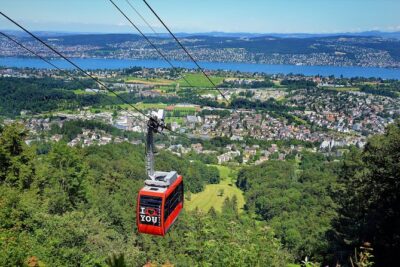
Zurich Walking Tour With Cruise and Aerial Cable Car
Read our review →
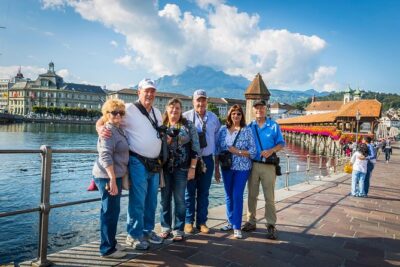
Lucerne Walking & Boat Tour: The Best Swiss Experience
Read our review →
3 in 1: Zurich Walking Tour – Cruise on the Lake – Cable Car Ride to Felsenegg
Read our review →
Glacier 3000 Ticket Including Cable Car and Peak Walk by Tissot
Read our review →
Zurich Private Customizable Guided Walking Tour
Read our review →
Bern Walking Tour: Explore Top Sights & Hidden Gems
Read our review →Browse the lists this tour appears in