
Review · GENEVA TOURS
Alpine Tour Across Switzerland
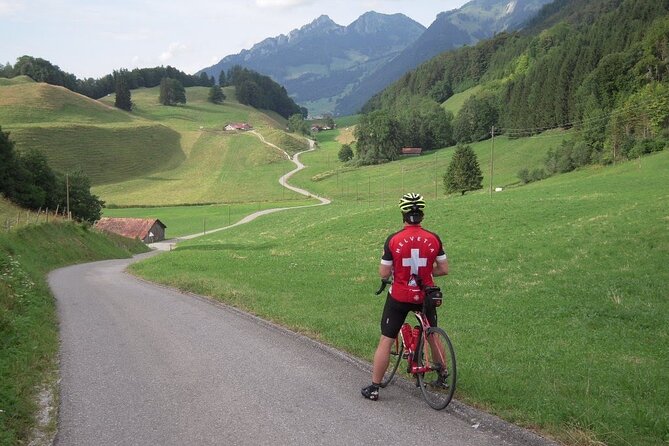
Switzerland rewards strong legs. This 11-day cycling route links Geneva, French Alpine villages, Swiss cheese country, Lake Lucerne, Klausen Pass, Appenzell, and Lake Constance. I like the route’s variety, especially the mix of bike riding, lake boats, mountain passes, historic towns, and a train return from Romanshorn. I also like the small group limit of 12, which should make the trip feel more personal and manageable than a large cycling convoy.
The catch is simple: this is not a casual ride with pretty scenery as a side benefit. You should expect about 75 kilometers and 1,000 meters of climbing per day, with six to seven hours in the saddle. Some days are gentler, but the 1,500-meter climb to Gruyères and the 1,600-meter ascent of Klausen Pass demand real fitness. The $4,596.97 price is considerable, so the route makes the most sense if you want a serious cycling holiday with organized support rather than a standard sightseeing trip.
In This Review
- Key points at a glance
- What the $4,596.97 price needs to deliver
- Geneva to Chatel: begin beside Lake Geneva
- The climb to Gruyères and a proper fondue stop
- Rolling roads from Gruyères to Thun
- Fluehli and the Alpine Panorama roads
- From Glaubenbuelen Pass to Lake Lucerne
- The Klausen Pass test on day eight
- Appenzell’s meadows and the final riding days
- The train back, with time for Bern
- Fitness, pacing, and the right rider
- What the customer feedback tells me
- Small practical details that matter
- Should you book the Alpine Tour Across Switzerland?
- FAQ
- Where does the Alpine Tour Across Switzerland start?
- How long does the experience last?
- How far do you cycle each day?
- How much time do I spend riding each day?
- What is the hardest climb on the route?
- Is there a rest day?
- How do I return after reaching Romanshorn?
Key points at a glance
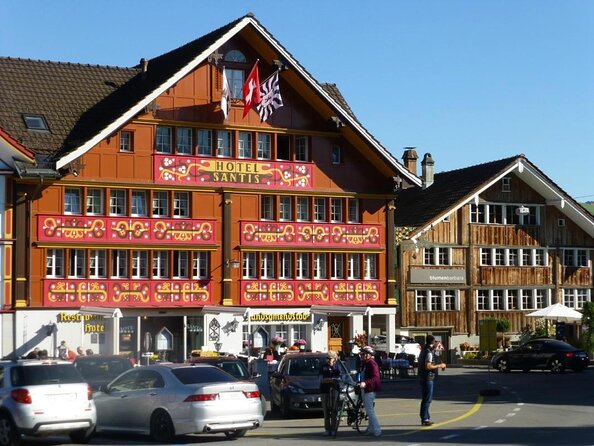
- About 75 kilometers of riding each day: Plan on six to seven hours on the bike, not a few relaxed spins between towns.
- Two major Alpine challenges: The climb to Gruyères reaches about 1,500 meters, while Klausen Pass rises 1,600 meters in 20 kilometers.
- A changing Switzerland: You move from French-speaking Switzerland to German-speaking Switzerland, passing through cheese country, lake districts, mountain villages, and Appenzell.
- Boat rides break up the riding: The route includes a cruise from Geneva to Yvoire and a boat across Lake Lucerne.
- A rest day in Thun: You can hike near the Swiss Alps, relax beside Lake Thun or Lake Brienz, or take on a mountain outing.
- A small group and supplied return train: The maximum group size is 12, and the train ticket back from Romanshorn is included.
What the $4,596.97 price needs to deliver
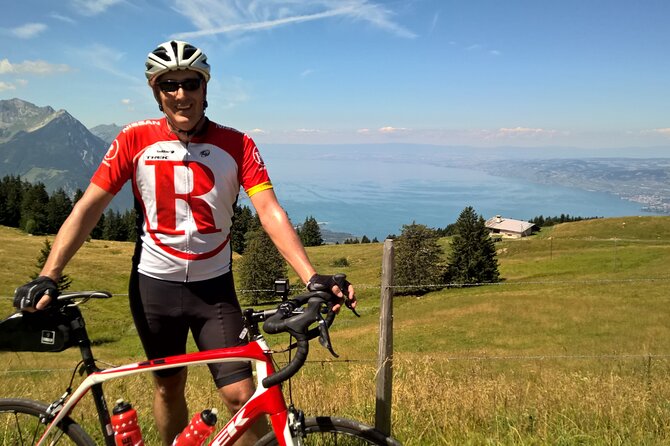
At nearly $4,600 per person, this is a major holiday purchase. The value does not come from one attraction or one hotel night. It comes from the complete route: eleven days of point-to-point cycling, access to some of Switzerland’s best mountain roads, boat connections, overnight stops, and the return train ticket from Romanshorn.
I would compare this price with the cost and effort of planning the same trip alone. You would need to map daily routes, judge climbing difficulty, arrange lodging in several towns, coordinate boats, solve the bike handoff in Romanshorn, and buy the return train ticket. The price is easier to justify if Bike Switzerland removes much of that work and gives you dependable route planning.
The tour also limits numbers to 12. That matters on a demanding ride. A small group can make departures, regrouping, and route questions easier than they would be with a large cycling club. Still, check exactly what the price includes before paying. The supplied information confirms the tour route and return train ticket, but it does not spell out every meal, hotel category, bike rental detail, luggage arrangement, or support service.
The timing is also worth noting. The experience is booked an average of 101 days ahead, so I would not leave planning until the last minute, especially if you need particular travel dates or want extra nights in Geneva or Bern.
A few more trips and experiences worth a look
- Award-Winning Geneva Chocolate &Old Town Tour with Boat Ride (3h)
★ 5.0 · 3,721 reviews - Chamonix & Mont Blanc Panoramic Sky-Glass Bus Guided Day Trip
★ 4.0 · 1,324 reviews - Annecy – Venice of the Alps – Tour from Geneva
★ 4.5 · 418 reviews
Geneva to Chatel: begin beside Lake Geneva
Day one is based in Geneva, with the overnight stay there. This is a useful start because you can arrive, settle in, and prepare for the riding rather than rushing straight into a mountain stage. The meeting point is on Rue des Grottes 22, near public transportation.
Day two begins with a boat ride from Geneva to Yvoire, across the lake on the French side. That is a fine way to begin the route. You get water views and a change of pace before the first serious road work. From Yvoire, you climb toward Chatel in France, where you spend the night before returning into Switzerland.
The day is listed at roughly 12 hours, so do not read the boat ride as a gentle sightseeing cruise followed by a short ride. You still need to be ready for a long day. Chatel gives the route an international flavor right away, but the border crossing also means you should carry the required travel documents and allow for a full day of movement.
The climb to Gruyères and a proper fondue stop
Day three is one of the route’s big tests. The climb reaches about 1,500 meters above Lake Geneva, so you will earn the arrival in Gruyères. The town is small and famous around the world for its cheese, which makes it a particularly fitting overnight stop on a bicycle trip.
I like the way this stage connects physical effort with local food. If the weather cooperates, fondue is the obvious reward. You should not count on a long, lazy dinner if you arrive late after the climb, though. Start early, keep your pace steady, and save enough energy for the final miles.
Gruyères is also a welcome contrast to Geneva. Instead of a large city, you get a compact town and a strong sense of place. The drawback is that the day’s climbing can be punishing for anyone who has trained mainly on flat roads. This is a route for riders who enjoy the climb itself, not just the downhill afterward.
Rolling roads from Gruyères to Thun
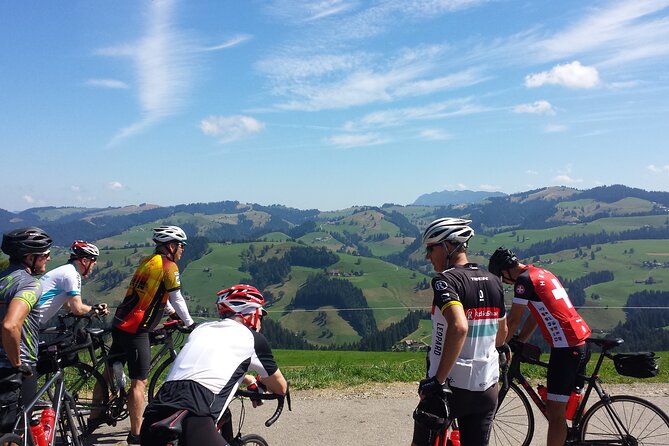
On day four, the route shifts from the French-speaking part of Switzerland toward the German-speaking side. You pass through the Gantrisch nature park on gentler rolling roads rather than facing another killer climb.
That change in rhythm is important. After Gruyères, a day of steady rollers lets your legs work without the same long, relentless ascent. It also gives you time to notice the farming country and the quieter roads instead of measuring every mile against a mountain pass.
You spend the night in Thun, and I would treat this as one of the route’s best bases. Day five is designed as a rest day, a smart choice in a trip that averages six to seven hours of riding. You can hike near the Alps, choose the Niederhorn or Jungfrau, or spend the day beside Lake Thun or Lake Brienz.
The only caution is that rest-day options can become secret extra-work days. If your legs are tired, relaxing by the lake may be the wiser choice than adding another mountain outing. A rest day is valuable only if you actually rest.
Something different, still within reach of Geneva:
- Best of Geneva City Tour with optional boat cruise
★ 4.0 · 416 reviews - Geneva Highlights 2-Hour Introductory Tour
★ 4.0 · 322 reviews - Chamonix Mont-Blanc Full Day Guided Tour
★ 5.0 · 314 reviews - Chamonix & Mont Blanc Guided Day Trip with SkyView Panoramic bus
★ 4.5 · 310 reviews
Fluehli and the Alpine Panorama roads
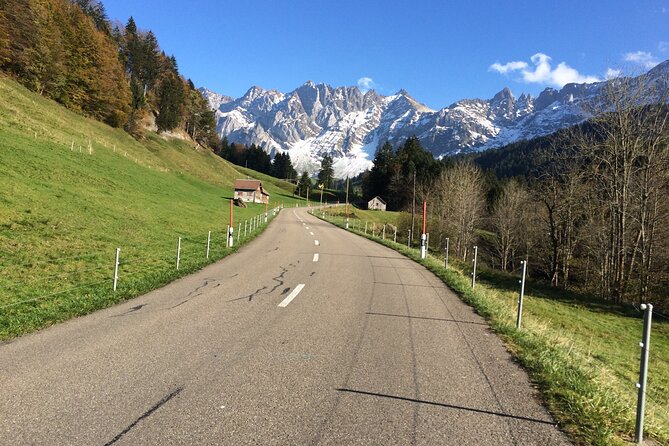
Day six takes you along narrow, quiet roads through the Alpine Panorama area and the Emmental, another major cheese-producing region. This stage sounds appealing for riders who prefer small roads and rural scenery to busy through routes.
The overnight stop is Fluehli, an isolated village with a recently renovated historic hotel. You can also visit the cool-water baths above town. That detail gives the day a nice local character. After hours on the bike, a simple cold-water treatment can sound better than a fancy attraction.
Isolation is part of the appeal, but it can also limit your options. Fluehli is not presented as a large town with lots of evening choices. Plan to enjoy the hotel, village, and surrounding countryside rather than expecting a busy nightlife scene or a long list of restaurants.
From Glaubenbuelen Pass to Lake Lucerne
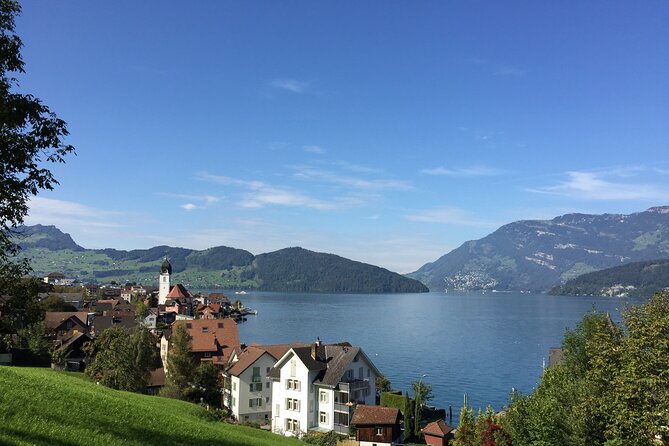
Day seven begins with more climbing over Glaubenbuelen Pass, although you are already partway up when the stage starts. The reward is a long descent with views toward Lake Sarnen and beyond. This is the kind of road day that gives a strong cyclist the payoff they want: a hard ascent followed by a sustained coast.
Once you reach lower ground, the route becomes flatter and follows lake roads toward Beckenried on Lake Lucerne. That contrast makes the stage easier to manage than a full day of climbing. You still need to control your speed and stay alert on the descent, especially after a demanding climb.
Beckenried is one of several stops where the route lets the water shape the journey. The lake is not just scenery outside the hotel window. It forms part of the transport and the road plan, which gives this trip more variety than a standard mountain loop.
The Klausen Pass test on day eight
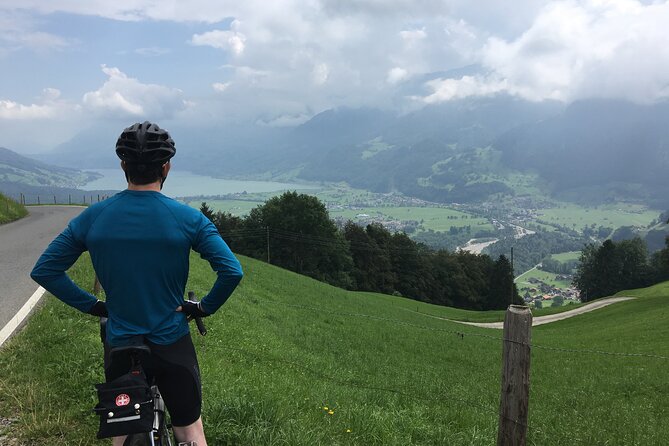
Day eight is the hardest stage. You begin with a boat ride across Lake Lucerne, then continue to Altdorf, associated with William Tell. From there, the road rises toward Klausen Pass.
The climb gains about 1,600 meters in 20 kilometers. That is a serious ascent, and the numbers tell you more than any cheerful description can. You need strong climbing fitness, a suitable bike setup, and the patience to ride at a controlled pace for a long time. Once over the pass, you get about 20 kilometers of downhill riding before reaching Weesen on Lake Walensee.
This is the day I would use to decide if the tour fits you. If a long climb is the highlight of your cycling year, Klausen Pass may be the reason to book. If you dislike extended uphill efforts, the route may feel more like an obligation than a holiday.
Weesen provides a scenic endpoint after the hardest work. The lake setting should feel well earned, but your arrival time may depend heavily on climbing speed. Keep your schedule flexible and do not plan an ambitious evening activity.
Appenzell’s meadows and the final riding days
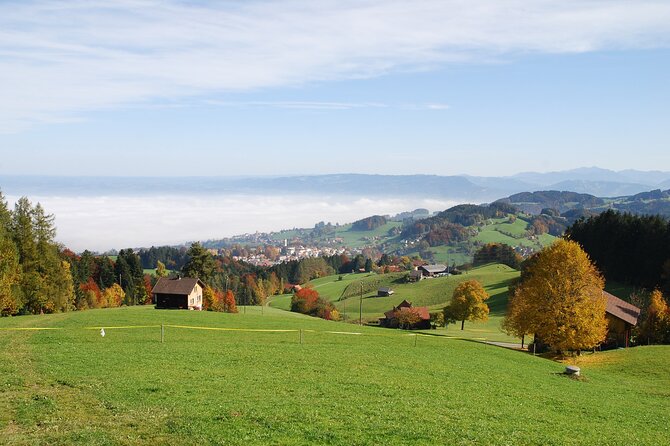
Day nine heads through the valleys around Appenzell, with the Säntis mountain in view. The route skirts the mountain’s base before continuing into pasture country and the town of Appenzell, surrounded by flowering meadows.
This is one of the trip’s most distinctive areas. Appenzell has a strong regional identity, and the route gives you more than a quick pass through a generic Swiss resort. The scenery also changes again: after big lake views and Alpine passes, you get open meadows and rolling pasture roads.
Day ten is gentler, with climbing and coasting through Appenzell’s natural roller-coaster terrain. The final climb takes you to Heiden, where you can stop for ice cream and get your first broad view of Lake Constance. From there, you continue to Romanshorn on the lake shore.
I like this ending because the physical demands ease before the trip finishes. You get one last climb, but it is framed as a scenic final challenge rather than another Klausen Pass. Romanshorn is a practical endpoint, with the lake offering a calm finish after days of mountain roads.
The train back, with time for Bern
On day eleven, you leave the bike in Romanshorn while the return arrangements are handled. You then take a train back to Geneva, or to another destination in Switzerland, with the ticket supplied. The ride takes about four and a half hours.
The suggested stop is Bern, Switzerland’s capital. That is good advice. Rather than treating the train as dead time, you can break the journey, stretch your legs, and see the city before continuing. The train connection also makes the route feel like a true crossing of Switzerland instead of a ride that simply loops back to its starting point.
Be clear about the end plan before you book. The activity ends back at the meeting point, but the supplied details also allow the train to take you to another Swiss destination. If you are flying out of Geneva, the direct return may be convenient. If you are continuing elsewhere, the flexibility is useful.
Fitness, pacing, and the right rider
You need a strong physical fitness level for this experience. The average of 75 kilometers per day can sound manageable until you add about 1,000 meters of climbing and six to seven hours in the saddle. The major climbs push the difficulty much higher on certain days.
I would train for sustained uphill riding, not just long flat-distance sessions. You should be comfortable spending a full day outside, climbing at a steady pace, and handling a long descent afterward. You also need to accept that weather can affect the experience, especially around the high passes and the fondue stop in Gruyères.
This tour suits:
- Experienced road cyclists who enjoy climbing
- Riders who want a point-to-point route rather than a single base
- Couples or small groups comfortable with long days
- People who value quiet roads, lake crossings, and regional food
- Cyclists who want help with the route and return transport
It is a poor match for casual riders, anyone seeking short daily outings, or people who want a sightseeing trip with only occasional cycling.
What the customer feedback tells me
The strongest praise centers on organization and personal help from John at Bike Switzerland. He is described as quick to answer questions before booking and before departure, with useful information during the planning process and afterward. That kind of response matters on a complicated route with several overnight towns, two boat rides, a bike handoff, and a long train return.
The experience also works for different riding styles. One couple completed six days on a tandem and liked having time for side trips. Another couple enjoyed the route as an independent cycling holiday. That suggests the itinerary can allow some flexibility rather than forcing every rider into a tightly controlled group pace.
Still, do not assume every side trip or shortened stage is built into the standard plan. Ask Bike Switzerland how much freedom you have, what happens if you need to alter a day, and how the bike is handled in Romanshorn. The published group limit is 12, but the customer feedback points toward a format where planning and independence matter as much as group riding.
Small practical details that matter
You receive confirmation at booking, and the experience offers a mobile ticket. The meeting point is near public transportation at Rue des Grottes 22 in Geneva. Listed operating hours are Tuesday through Saturday, 9:00 a.m. to 5:00 p.m., for the stated operating period through June 17, 2026.
Cancellation is flexible up to 24 hours before the start time for a full refund. Changes or cancellations inside that 24-hour window are not accepted and are not refunded. Since the trip is commonly booked well ahead, read the conditions carefully before making nonrefundable travel arrangements.
The small group limit is reassuring, but it does not change the physical demands. I would ask specific questions about included lodging, meals, luggage, bike equipment, mechanical help, and the exact meaning of leaving the bike in Romanshorn. Those details can change the real value of a $4,596.97 cycling holiday.
Should you book the Alpine Tour Across Switzerland?
Book it if you are an experienced road cyclist who sees mountain passes as the point of the trip. The route offers an unusually broad sample of Switzerland in eleven days: Geneva and Lake Geneva, French Alpine France, Gruyères, Gantrisch, Thun, Emmental, Lake Lucerne, Klausen Pass, Appenzell, and Lake Constance.
Skip it if you want easy rides, flexible mornings, or a low-cost way to see Switzerland. The price is high, and the riding is serious. For the right cyclist, though, the value lies in the carefully connected route, the mix of boats and trains, the smaller group size, and the chance to finish the country crossing under your own power.
FAQ
Where does the Alpine Tour Across Switzerland start?
It starts at Rue des Grottes 22, 1201 Genève, Switzerland.
How long does the experience last?
The tour lasts approximately 11 days.
How far do you cycle each day?
You cycle an average of about 75 kilometers per day, with around 1,000 meters of daily climbing.
How much time do I spend riding each day?
You should expect to spend about six to seven hours in the saddle each day.
What is the hardest climb on the route?
The Klausen Pass is the toughest climb. It gains about 1,600 meters in 20 kilometers, followed by a 20-kilometer downhill section.
Is there a rest day?
Yes. Day five in Thun is available as an extra day for rest, hiking near the Swiss Alps, or time beside Lake Thun or Lake Brienz.
How do I return after reaching Romanshorn?
You leave the bike in Romanshorn and take a train back to Geneva or another destination in Switzerland. The train ticket is supplied, and the return journey takes about four and a half hours.
Just added around Geneva
- Private Photo Tour LUXE CUSTOM in Geneva★ 4.5 · 3 reviews
- Geneva Countryside By E-Bike With Wine Tasting★ 4.0 · 4 reviews
- Private Transfer from Geneva City to Geneva Airport★ 5.0 · 4 reviews
- Lake Annecy Private Day Trip from Geneva★ 4.0 · 4 reviews
- Explore the Instaworthy Spots of Geneva with a Local★ 4.0 · 4 reviews
- Private Tour to Glacier 3000 – High level experience -from Geneva★ 5.0 · 4 reviews
- Private Tour : The best of Geneva city tour★ 5.0 · 4 reviews
- Geneva Crown★ 5.0 · 4 reviews
Geneva Tours, compared.

Award-Winning Geneva Chocolate &Old Town Tour with Boat Ride (3h)
Read our review →
Chamonix & Mont Blanc Panoramic Sky-Glass Bus Guided Day Trip
Read our review →
Best of Geneva City Tour with optional boat cruise
Read our review →
Chamonix & Mont Blanc Guided Day Trip with SkyView Panoramic bus
Read our review →
Gruyères Tour from Geneva With Train, Chocolate and Cheese
Read our review →Browse the lists this tour appears in